
High-temperature ceramic pan coatings: use assessment
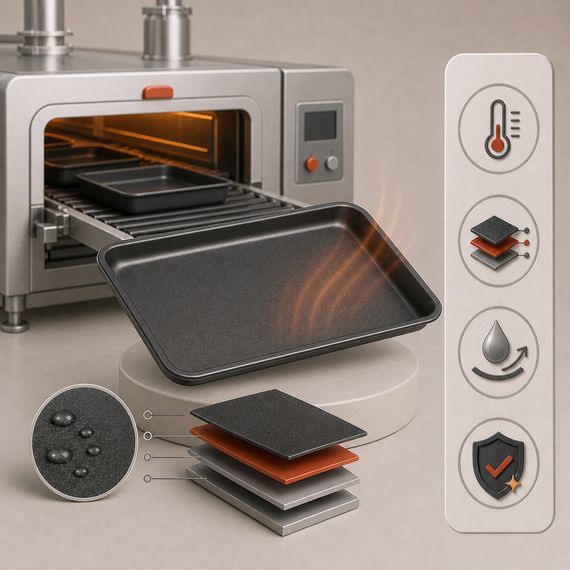
Coating selection for a pan operating at high temperatures should not rest on a single temperature-resistance statement. The absence of visible surface deterioration does not show that non-stick performance and food contact compliance are also maintained under those conditions. For a ceramic-based coating, assess duration of use, thermal cycling, body material, and the food to be produced together.
State the most demanding condition clearly in a high-temperature inquiry: situations such as holding empty equipment, repeated oven entry, or concentrated heating in a particular area can be recorded separately. These are not automatic recommendations for use; they are inputs for technical review. Sharing only the normal production average may leave more severe conditions that the coating could experience outside the assessment.
Resistance and operating performance
If technical documentation includes temperature information, check whether it relates to continuous use, brief exposure, or a manufacturing operation. Curing temperature is not end-use temperature. The oven setting and the temperature experienced by the part are also separate information. Direct flame, localized heating, and use inside an oven should not be treated as the same conditions.
When assessing Powerseramik, clarify the product code and relevant technical instructions with Powerpan. Another manufacturer’s ceramic coating data do not constitute evidence for this system. Describing a surface as hard also does not mean that metal tools or abrasive cleaning are suitable.
Pan and product information
- Metal body and pan geometry.
- Product recipe, contact time, and removal method.
- Oven type, loading, and cooling arrangement.
- Cleaner, mechanical cleaning, and stacking conditions.
Check body deformation under high thermal loads as well. The behavior between the coating surface and metal cannot be understood from the appearance of the top film alone. Bottoms, edges, and corners can be addressed separately in the final inspection plan.
Verification plan
Product release trials should use the actual recipe. Track the initial result separately from changes after repeated use. Add the duration and cooling conditions used in thermal testing to the report. A test that does not represent operating conditions cannot support a general durability guarantee.
Food contact assessment should relate to the selected finished coating and intended application. If cracks, blisters, or peeling appear, set the equipment aside for quality review. Share your high-temperature expectations and process details in your inquiry to Powerpan; confirm the usable temperature range, maintenance instructions, and report scope in writing. Selection should be based on the requirements of the specific application rather than a general claim of superiority over PTFE.