
Old coating removal: pan condition and refurbishment
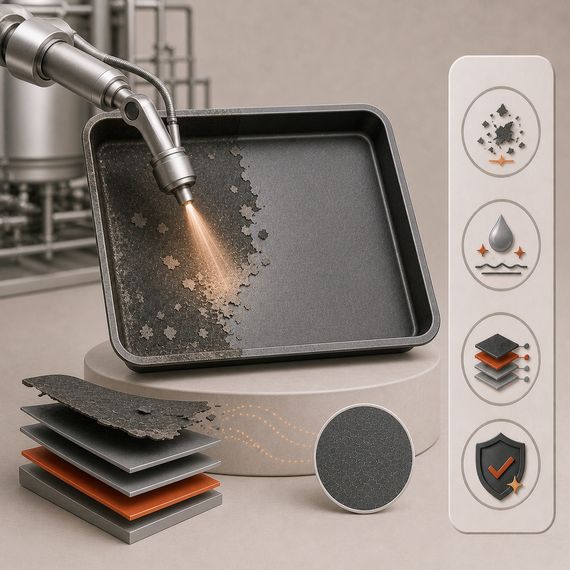
Removing an old coating does not mean that a pan is reusable. After removal, the metal body’s condition and suitability for the new coating must be assessed separately. At the start of refurbishment, record the old surface type, damage distribution, and mechanical condition of the equipment together.
Assessment before removal
Check body distortion, cracks, edge damage, and significant surface loss. Initial photos can show the distribution of damage, but they cannot reveal the full condition of the metal beneath the coating. Make a final refurbishment decision only after the necessary examination is complete.
Knowing the coating type helps with method selection. If the old formulation is unknown, keep that uncertainty explicit in the file. A multilayer structure or earlier local intervention may change the removal scope. Do not apply the same processing plan based only on pan dimensions.
Method selection and residue control
Thermal, chemical, or mechanical removal methods may be considered as part of a professional process. Suitability depends on the old film and body. No recipe can be given for burning off all PTFE coatings at the same temperature or using the same chemical on every metal. Protecting the metal during processing and managing the residues produced are part of the control plan.
- Identification of the old coating and previous treatments.
- Body material and pre-process condition.
- Film or process residues remaining after removal.
- Acceptance conditions before moving to new surface preparation.
Removal and roughening should not be viewed as the same operation. After the old film is removed, the cleanliness and profile required by the new system must be established separately. Pan corners, areas around perforations, and connection points may require different checks from the open base.
Completing the refurbishment decision
Rechecking the metal body is important in the post-removal assessment. A new coating does not correct a bent base or advanced metal loss. Refurbishment cost can be compared with new equipment for the same scope of use. Do not assume that it will be more economical in every case.
When sending pans for inspection, separating and identifying damaged groups and groups that appear sound makes recordkeeping easier. Include quantities, previous coating information, and the operating problem in the shipping file. The quote should explain whether removal is priced together with new coating, inspection, and packaging.
Share photos, dimensions, and process information when discussing refurbishment with Powerpan. Clarify the scope of removal, surface preparation, and new application. Do not remove coatings at home with an open flame, sandpaper, or chemical mixtures; this content is not an application recipe.