
Surface roughening and coating profile control
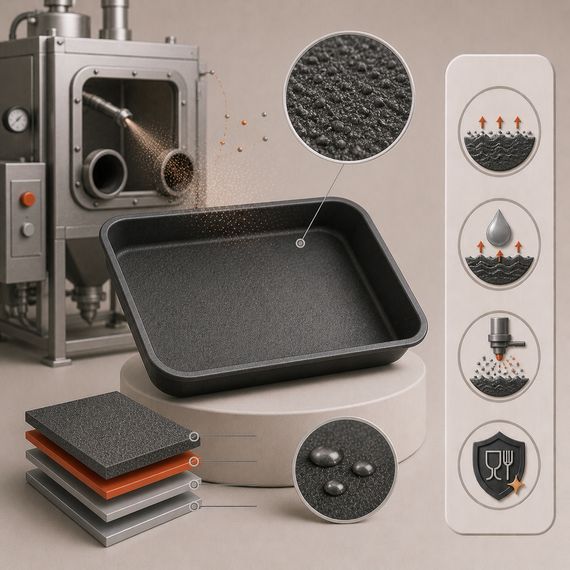
The aim of surface roughening is to create a suitable profile for the selected coating, not to make the metal as coarse as possible. A profile that is too low or too high can cause different application problems. The metal body, film structure, and method must be assessed together.
Marking measurement locations on the drawing makes comparison with later batches easier. If the instrument cannot reach a corner or narrow area, identify it separately in the control plan instead of allowing it to disappear within an average value.
Cleaning before treatment
Oil and loose contamination are addressed using an appropriate method before roughening. Treating a dirty surface more aggressively does not replace controlled preparation. On a pan being refurbished, stripping the old coating and creating the profile may be separate stages. The process plan must keep this distinction clear.
A thin body, multicavity mold, and perforated tray do not behave mechanically in the same way. Check for excessive treatment or inadequate access at edges, bottom areas, and around openings. Pressure and abrasive selection should not be given as a single recipe for every part.
Profile and measurement
Ra provides an average measure of surface roughness; on its own, it does not describe the distribution of all peaks and valleys on the surface. The measurement method, areas, and target values must be defined in the technical specification. A single reading from a broad base may not represent the entire mold geometry.
| Check | Assessment topic |
|---|---|
| Profile | A target appropriate to the coating system |
| Local distribution | Differences at edges, corners, and bottom areas |
| Body | Shape and surface integrity after treatment |
| Residues | Removal of dust and abrasive residues |
Abrasive blasting, shot-based treatment, and other preparation methods are not direct equivalents. Assess the surface each option creates and its effect on the part. Naming a laser or another specialized method does not mean the company provides that service; feasibility requires separate confirmation.
Moving on to coating
After treatment, the surface is cleaned, protected, and subjected to the acceptance inspection defined for the new coating. The holding environment and handling method can affect recontamination. Even with a suitable profile, film distribution, primer, and curing remain separate control stages. Roughening alone does not provide a long service life.
When contacting Powerpan, share metal information, the part drawing, and the coating to be selected. Clarify the required profile and measurement scope using the system instructions. Do not try to restore nonstick performance by sanding an existing coated pan at your facility. Roughening is professional surface preparation before refurbishment or a new application. Its results must be read alongside adhesion and actual-use assessments.