
Adhesion-enhancing treatment for coating substrates
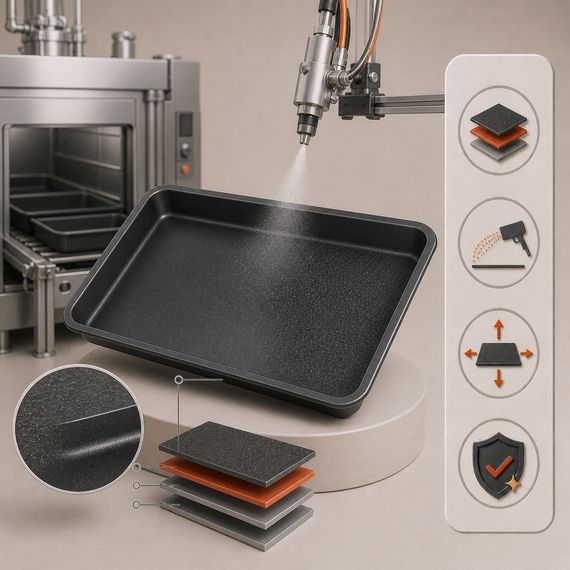
Adhesion-enhancing treatment comprises preparation and application controls intended to improve the coating’s bond to the metal substrate. It is not the same as preventing food from sticking to a pan. A coating may adhere well to metal while product release is poor; conversely, a film that initially releases products easily may have a substrate adhesion problem.
The inspection must distinguish damage at the metal-film interface from damage between coating layers. This distinction helps determine which aspects of the preparation and primer history or topcoat application need investigation.
Cleanliness and an appropriate profile
Oil, dust, or old film residues on the substrate must be included in the preparation assessment. Roughening does not establish cleanliness. The target profile is determined by the metal and selected coating system. A rougher surface should not be assumed to provide better adhesion in every case.
Thin pan bodies, corners, and hole edges must be protected during preparation. The same blasting settings may not have the same effect throughout the geometry. Recontamination after treatment through dirty handling tools or hand contact must also be controlled.
Primer and layer compatibility
In a system that uses it, primer is part of the bond between the metal and subsequent coating layers. The same primer or film thickness cannot be recommended for every material. Primer application, drying, or heat-treatment conditions are determined from the relevant product instructions. Compatibility with the topcoat is a separate inspection topic.
- Identification of the metal body and preparation method.
- The system relationship between the selected primer and topcoat.
- Records of intercoat processing and waiting times.
- A curing and adhesion assessment plan.
Using a primer alone does not show that the risk of delamination has been eliminated. Surface preparation, application, and heat treatment must be considered together. The expected bond is verified using a defined method and acceptance criterion.
Testing and investigating problems
The report must explain which sample and area the adhesion test represents. A result from a flat panel does not automatically characterize every mold corner. The method must be appropriate to the product structure; a particular rating should not be treated as a common acceptance requirement for every coating.
For a pan showing peeling, record where the defect began and its service history. Set the equipment aside for quality review; do not attempt a temporary fix by scraping the surface. Send Powerpan photographs, the coating date, and cleaning information. Define the adhesion improvement request as a new application, refurbishment, or investigation of an existing problem. Evaluate the treatment’s effect using test results and actual service data; the term does not imply a general reduction in rejects or a service-life guarantee.