
Multilayer pan coating: system selection and control
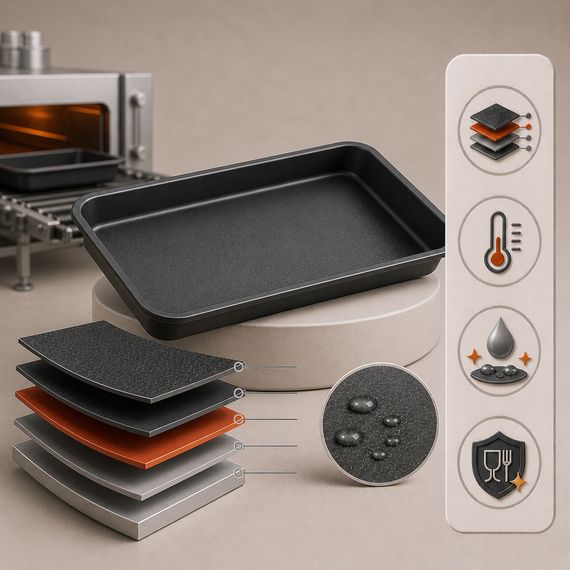
Multilayer pan coating involves applying layers with different functions within a single surface system. Substrate adhesion, mechanical behavior, and product release do not all have to be provided to the same degree by the same layer. However, a higher layer count alone does not prove a longer service life or better results with every recipe.
Listing only the total number of layers in a quote may not be enough to describe the layer structure. The materials assessed as a single system and the surface inspected at delivery should be explained. If a different application is requested under the same trade name, ask how this is reflected in the technical documentation. Users should not alter layer compatibility by adding another product afterward.
How the layers work together
In the selected system, the primer supports the bond between the metal surface and the coating. Intermediate coats may have different functions depending on the system structure. The topcoat is one of the components that determine the behavior of the food contact surface. These functions should be defined in the product’s technical documentation; the same structure cannot be assumed for every multilayer formulation.
When considering Powergranit as a multilayer coating option, clarify the system’s current layer arrangement and suitable applications with Powerpan. The trade name should not be used in place of film thickness or a specific durability result.
Geometry and application control
The corner of a deep cake mold presents different application conditions from the open base of a flat tray. The distribution of each coat and its compatibility with the next coat must be checked. Drying or treatment requirements between coats are determined by the material instructions. Applying more coats does not count as making up for inadequate surface preparation.
- Identify the body material and current surface condition.
- Request the product codes for the layers and the complete system structure.
- Assess film distribution at corners, edges, and mold bottoms.
- Include the scope of curing and final inspection in the quotation file.
Which operating conditions should be assessed?
In intensive production, repeated cleaning and mechanical contact are important inputs for coating selection. However, the coating family should not be determined by the number of shifts alone. The dough or cake recipe, product removal movement, temperature, and stacking arrangement are also assessed. Easy product release from a surface at the outset does not describe its durability after use.
If a comparison with a single-coat or another system is planned, arrange a pilot trial under the same recipe and maintenance conditions. Track product release, cleaning, and surface integrity separately. Food contact assessment should relate to the complete finished system. Share equipment photos and operating conditions with Powerpan to clarify layer selection, reporting needs, and refurbishment scope together.