
Baking tray surface cleaning and preparation for recoating
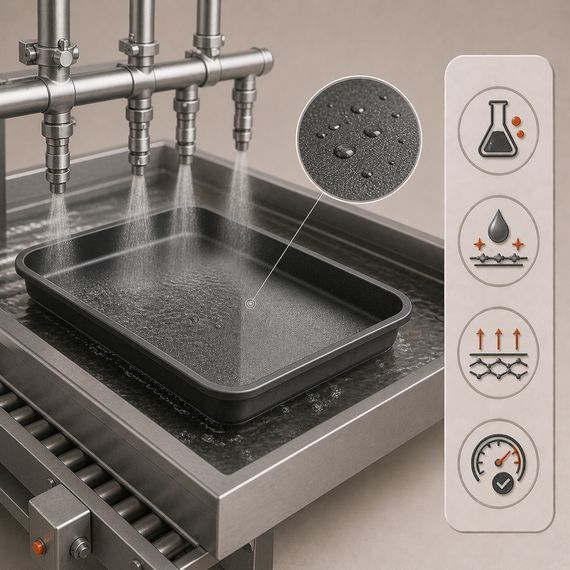
The first distinction in a tray surface cleaning request is between maintenance cleaning that preserves the existing coating and preparation before a new coating. A method suitable for cleaning a pan in service may differ from the method used on a body whose old film will be removed. Describing these two scopes together can lead to the wrong treatment.
Cleaning during use
If the coating remains intact, remove residues according to the product-specific maintenance instructions. Check cleaner, concentration, temperature, and tool compatibility together. Blasting, sanding, or uncontrolled high-temperature treatment to remove oil or sugar buildup is not a maintenance cleaning procedure.
If there is peeling, blistering, or flaking, set the pan aside for quality review. Trying to hide damage with strong chemicals does not address its cause. Cleaning alone does not automatically establish that a damaged surface is fit to return to service.
Preparation before coating
The refurbishment file identifies the old film, contamination, and metal body separately. Determine whether stripping is necessary; then remove process residues and prepare the surface required by the new system. Mechanical, chemical, or thermal options must be assessed in relation to material and geometry. None is a universal deep-cleaning method for every pan.
- Large surface areas and edge buildup on a flat base.
- Residues at the bottom and in corners of a multicavity mold.
- Openings and hole edges on a perforated tray.
- Process residues retained in joints or folded areas.
Body flatness and surface material loss may be inspected again after cleaning. A new film does not repair a pan that is mechanically unsuitable. Clean handling, drying, and protection of the prepared surface until application are also part of the plan.
Defining the scope of the request
Tell Powerpan whether you want to preserve the existing coating or prepare the surface before refurbishment. Photographs, body information, and residue type support the assessment. Also share the cleaner used and any previous treatments; this history can affect the surface condition beneath the visible contamination.
The service assessment must explain whether cleaning, stripping, and new coating are handled separately or together. Clarify the final inspection method and information supplied at delivery. Read a cleanability trial separately from nonstick performance and food contact compliance. Capabilities such as installed ultrasonic or dry-ice equipment should not be assumed to be included in the service without confirmation from the company.