
Non-stick coating durability: usage and renewal planning
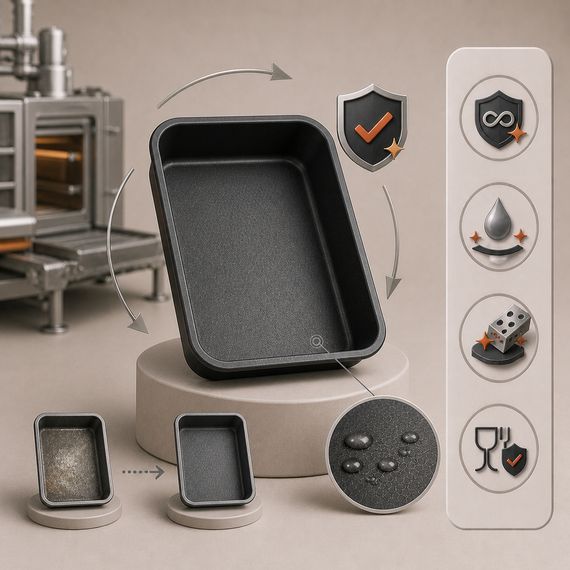
For a facility seeking a long-lasting non-stick coating, the central question is not just how many years the surface will last, but what operating load it will withstand. The same pan may undergo more thermal cycles and cleaning on one line while seeing less use on another. Comparing calendar time alone hides the coating’s actual workload.
Keep the maintenance team’s damage reports together with the production team’s product release records. Tracking only the date a pan is replaced does not show why refurbishment was chosen. Cleaning difficulty, body defects, and coating integrity are different reasons for a decision. Separating them makes it clearer which expectation the next coating selection should address.
Identifying contact that reduces service life
Examine the distribution of damage before selecting a coating. Heavy edge wear calls for investigating stacking or handling contact; scratches in mold corners call for examining the product removal movement. If the problematic contact remains unchanged and only the coating changes, the same area may be stressed again.
Include the cleaning routine in the selection file as well. Record cleaner composition, concentration, duration, and mechanical action together. A growing need for harsher tools to remove buildup indicates that the maintenance method and surface condition should be assessed together.
Linking system selection to operating load
Multilayer construction, top-surface behavior, and adhesion arrangements may offer different design options. However, no universal service-life ranking can be established from layer count or trade name. Preparation needs may also differ between new and refurbished bodies. Selection should be based on the product’s technical documentation and actual operating conditions.
- Record daily use with a common definition of a cycle.
- Specify dough, greasing, and oven arrangements.
- Photograph product removal and stacking contact.
- Compare surface appearance after cleaning with the baseline.
Pilot results and refurbishment planning
Monitor product release, cleaning requirements, and surface integrity separately during pilot use. Results from two pan groups that do not operate under the same conditions should not be presented as coating superiority. If laboratory data are available, explain the method and the limits on applying it to the actual line.
A refurbishment plan considers measured performance changes together with body condition. A planned maintenance date does not mean damaged equipment can remain in use until that date. Peeling or flaking requires equipment to be set aside for quality review. Share these usage data in your inquiry to Powerpan; ask about the proposed coating’s technical scope, maintenance conditions, and the basis of any service-life claim. Linking durability expectations to measurable conditions is a more useful purchasing criterion than a general statement of long life.