
Nano-tech food contact coatings: material and use assessment
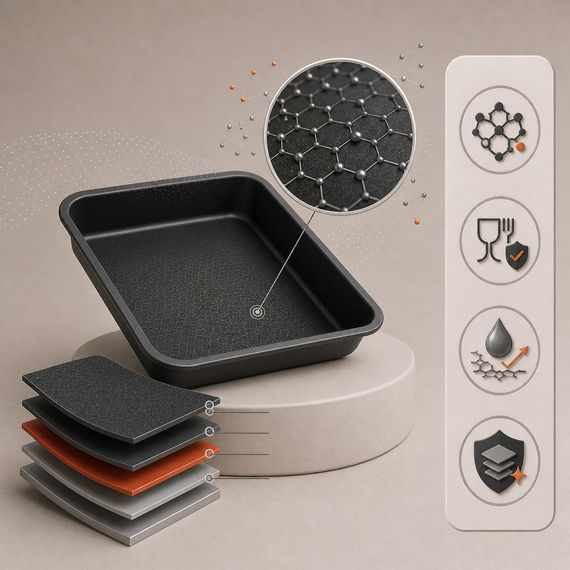
To assess a coating for food contact equipment marketed as nano-tech, first establish which technical characteristic that name describes. Film structure, filler material, and another surface component are not the same concept. Particle size, safety, or durability cannot be inferred from a trade name.
Use verifiable fields instead of the word nano when comparing quotes. The product code, finished layer structure, intended contact conditions, and sample examined in the report can be shown in the same table. This distinguishes a quote that merely uses a different name from one that actually proposes a different system. No conclusion about superior durability or use should be drawn for options with incomplete technical definitions.
Start with the material definition
Request the product code, coating family, and layer structure. It should be clear which formulation component or measurement the term nano refers to. The surface structure cannot be considered established without connecting the manufacturer’s description to a measurement or test report. The measurements and reports being compared must identify the product code offered in the quote.
Technical assessment should not rely on surface appearance alone. A smooth or glossy film is not proof of component size. Likewise, a surface that sheds water droplets does not establish migration into food or long-term product release performance.
Documentation suited to food applications
- Product and layer information identifying the finished coating.
- The intended food, contact time, and temperature conditions.
- A compliance assessment linked to the sample.
- Operating instructions, cleaning method, and use limitations.
Food contact documentation and a non-stick performance report answer different questions. Good mechanical durability does not confirm the suitability of every component for every use. A management system certificate also does not replace a test report for the selected finished coating.
What should a production trial track?
Once the coating option has been technically defined, a controlled product release trial can be conducted with the actual recipe. Keep greasing, baking, and removal timing constant. Record product left in the mold, product integrity, and cleaning requirements separately. Compare surface changes after the trial with the baseline image.
A production trial shows how the defined system behaves at the facility; it does not determine particle size. Measurements of nanostructure require separate evidence. Send the equipment type, process conditions, and required technical documents with your inquiry to Powerpan. Do not compare price or durability advantages by name alone before the formulation definition and scope of use are clear. Equipment showing peeling or flaking should be set aside for quality assessment.