
Food contact safety testing: samples and conditions of use
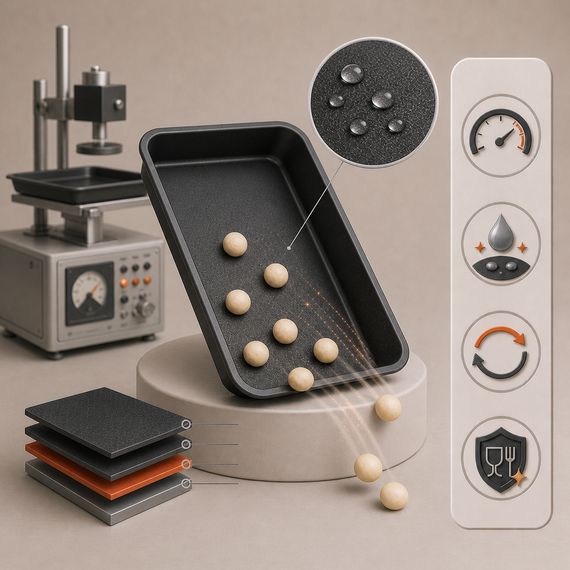
A food contact safety assessment does not simply investigate whether a coating is easy to clean. Define the conditions under which the finished surface will contact food and how a representative sample will be prepared. Bread pans, cake molds, and other process equipment may not operate with the same food, time, or temperature conditions.
Do not base sample selection solely on an easily accessible flat surface. For a mold with a multilayer coating or a recoated pan, explain how the sample represents the finished structure. Photos and application details attached to the report help establish this connection. An unclear sample description makes it difficult to link a favorable-looking result to the product ordered.
Defining use before testing
Include the properties of the food to be produced, contact time, repeated use, and cleaning routine in the file. The oven setting, temperature experienced by the coating, and food contact conditions are separate information. The sample description must also include the coating code, layer structure, and body to which it is applied.
Assess whether a sample taken from a new coating represents the same structure as a recoated pan. When stripping or application procedures change, check the previous report’s relationship to the new product. Being in the same material family alone does not establish that relationship.
What do different assessments show?
| Assessment | Question |
|---|---|
| Substance migration | Which transfers are measured under the defined conditions? |
| Sensory effects | Are unacceptable changes in food taste or odor observed? |
| Component review | What is the formulation’s basis for compliance? |
| Surface integrity | Are there physical changes after use and maintenance? |
The European Commission’s explanation distinguishes the general food contact framework from material-specific regulations. This distinction matters when selecting the basis for testing; not all conditions specified for plastics automatically transfer to coatings on metal. The Commission’s legislation overview helps assess scope.
Linking results to the use file
Look for sample identity, method, contact medium, time, temperature, and assessment criteria in the report. It must be clear for which use the measured result is considered sufficient. A non-stick trial or management system certificate does not replace this information.
When speaking with Powerpan, share your equipment and process conditions; clarify the testing organization, sample preparation, and report scope in advance. Evaluate the document together with the care instructions. Later changes to temperature, cleaner, or product recipe may require a review of the file’s use scope. A single report is limited to the defined sample and conditions of use, not the entire coating family.