
High-temperature curing: system-specific process control
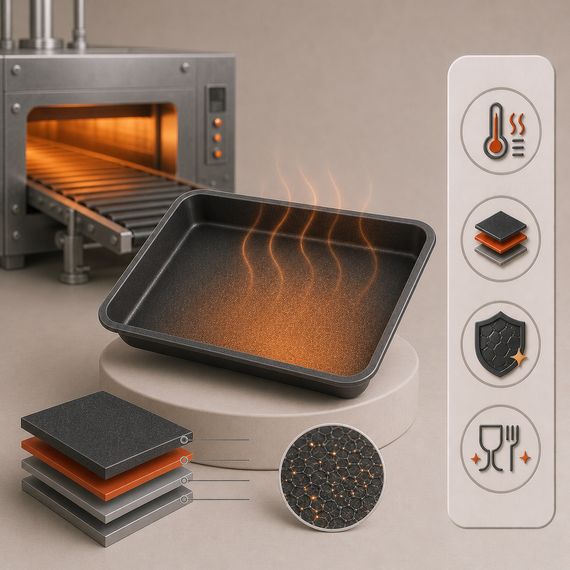
High-temperature curing should be assessed as a professional manufacturing process required by the selected coating system. A higher oven setting does not produce a stronger or more non-stick surface in every material. Check whether the metal body and part geometry, as well as the coating, are suitable for this process.
If there are connection areas that will not be coated or additional components, assess their thermal suitability before processing as well. Knowing only the material of the main metal body may not show that the entire piece of equipment is suitable for the same treatment.
Material instructions are the basis
A common temperature recipe cannot be given without identifying the product code, layer structure, and recommended process profile. The official Teflon table lists different PTFE product codes separately with use and curing information. The manufacturer’s system table demonstrates the need for product-specific selection; its values cannot be used as limits for Powerpan coatings.
Fluoropolymer-, silicone-, and ceramic-based systems should not be assumed to have the same film formation mechanism. The general term polymerization does not explain every heat treatment. Assess the successive processing conditions for primer and topcoat according to the system documentation.
Body and oven load
Examine shape retention of a thin pan body, mold cavity uniformity, and any connection areas. Placement in the oven may affect part heating. Without representative temperature records, do not assume that an air temperature setting is sufficient for all parts.
- Body and geometry inspection before coating.
- Material preparation and treatment records between coats.
- Time linked to part temperature.
- Cooling and post-process handling conditions.
How the heat treatment reaches its peak and how long the part spends there matter as much as the peak value. Review the control plan when the load or part type changes. Keeping records with batch identification allows assessment of which equipment a deviation affected.
Scope of final inspection
Consider film appearance, distribution, and an appropriate adhesion assessment together. Treating one solvent rub test as a universal curing verification for all coatings is not appropriate. Match the test method and acceptance conditions to the system.
Share the body material, part drawing, and intended use in your inquiry to Powerpan. Clarify the curing service scope, monitoring, and reporting expectations. Processing temperature does not confer permission to use the product with food at high temperatures. This process is not a recipe for refurbishing a pan by heating it at home; coating removal and application are carried out under suitable facility conditions.