
Non-stick baking pan coatings: selection and care
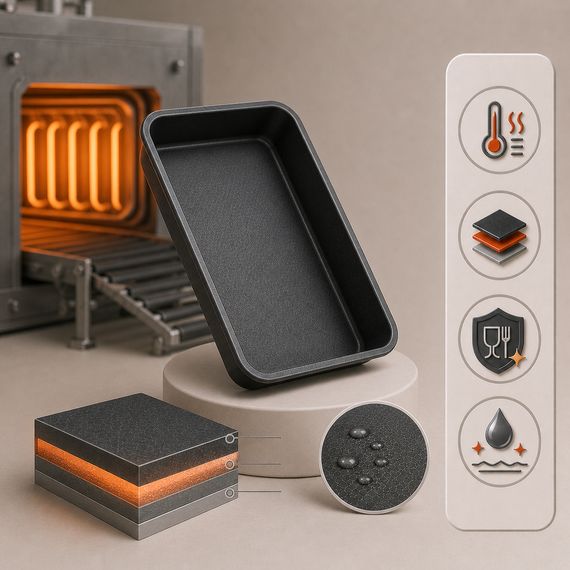
When choosing a baking pan coating, first identify the product being made and the existing pan structure. Bread baked on a flat tray, a product prepared on a perforated pan, and cake in a deep mold do not create the same contact conditions. A non-stick surface is assessed for its ability to support product release under those conditions; it does not promise the same result with every recipe.
A quote for perforated or multicavity pans should also specify which surfaces will be coated. The internal baking surface, external base, and handling areas do not serve the same operating function. If the coating scope is clarified in a drawing, delivery inspection can follow that same scope. Surface selection should be assessed together with oven supports and mechanical contact.
Defining oven conditions accurately
The thermal load on the coating is not limited to the temperature displayed on the oven panel. Holding periods, repeated oven entry, cooling, and transitions to cleaning are also part of the operating routine. Check the written limits for the selected coating; do not use another system’s temperature rating. Direct flame contact is not equivalent to oven use.
Product release may vary with recipes containing fat, sugar, or different moisture levels. Record the greasing practice and removal timing before making a coating decision. Simply using more oil to reduce sticking does not replace an investigation of the underlying cause.
Assessment before coating
For a new pan, examine the body material and geometry; for a pan being refurbished, also examine the condition of the old coating. A body that is bent, cracked, or has advanced surface loss may not be suitable for recoating. Removal and surface preparation must be compatible with the selected material and coating system.
- Distinguish external dimensions from usable baking area.
- Add bottoms, corners, edges, and areas around perforations to the inspection plan.
- Clarify the scope of film distribution and curing records.
- Specify the required food contact and maintenance documents in the order.
Pilot use and daily care
In the first trials, monitor product release with the same recipe and loading arrangement. Record the cleaning work and surface integrity separately. Follow the tool and cleaner requirements in the operating instructions consistently across shifts. Address wet stacking and surfaces rubbing against one another in the maintenance plan.
When requesting coating from Powerpan, share pan photos, body information, dimensions, and production conditions. Assess system selection, suitability for refurbishment, and reporting needs together. A fixed service life or automatic safety conclusion should not be inferred from the coating name. Even if product release is good, equipment showing peeling or flaking should be removed from service for quality review.