
Non-stick pan coatings: evaluating product release
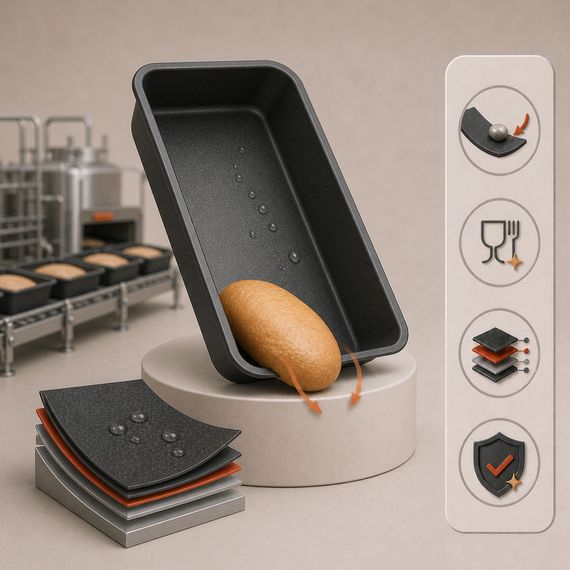
The coating is not always the reason a product sticks to a pan. Dough characteristics, proofing, greasing, degree of baking, and removal timing affect release from the surface. A coating intended to prevent sticking should be selected after these variables are defined. This helps distinguish a surface problem from the effects of production conditions.
If the greasing routine changes, keeping the recipe and removal timing unchanged makes comparison easier. It is also useful to record product left in the pan in a consistent way for each trial. Monitor not only whether the product releases easily, but also whether it retains its intended shape. A product that releases intact but has not reached the required degree of baking should not count as a successful comparison.
Record where and when sticking occurs
Is the product difficult to release from the base, sidewall, or mold corner? Did the problem begin with a new pan, or did it increase after use? Are all pans affected with the same recipe? These questions define the scope of the coating assessment. Treating a problem in one mold cavity as a system-wide issue may overlook local mechanical contact.
Equipment with peeling, blistering, or flaking coatings is removed from service. Applying more oil to a damaged surface or working on it with metal tools does not constitute repair. If coating integrity is intact, buildup can be addressed using the appropriate cleaning instructions.
How coating selection relates to the product
Fat-rich dough, sweet cake, and other products create different surface conditions. PTFE-, silicone-, or ceramic-based options should not be compared by family name alone. Check the finished formulation’s operating instructions and food contact scope. Different systems may not give the same result with the same recipe.
| Variable | What to keep constant during the trial |
|---|---|
| Recipe | Dough composition and portion size |
| Greasing | Amount and application method, if used |
| Baking | Loading and thermal conditions |
| Removal | Timing, tool, and movement |
From the trial to the purchasing decision
A controlled trial assesses not only ease of removal, but also product integrity and residue left in the pan. Cleaning requirements are recorded separately. A single successful trial should not be taken to establish oil-free operation or non-stick results with every product.
Share photos of the problem, pan geometry, and process information with Powerpan. Refurbishing the existing surface and selecting a new system can be assessed as separate options. Metal body suitability, surface preparation, and a maintenance plan are part of the decision. The aim is to establish clear acceptance criteria for your own product and a traceable trial file instead of a general non-stick promise.