
Pan coating for mass-production food lines
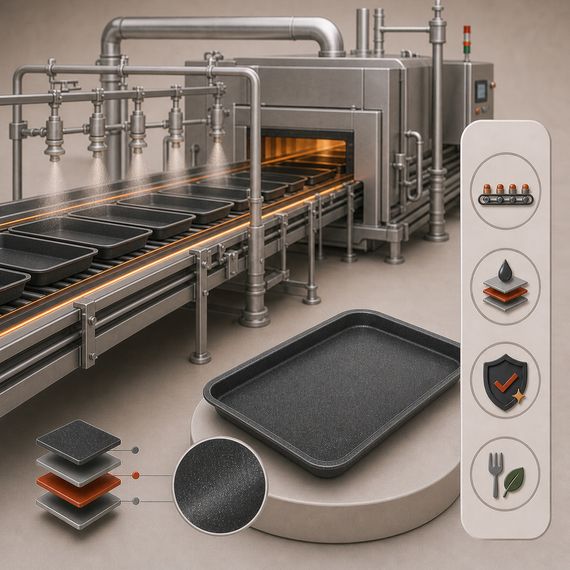
On a mass-production food line, a pan does more than provide a baking surface. It moves between loading, oven, unloading, and return stations. The entire movement must be reviewed when renewing the coating; how the pan fits the carrier and works with the unloading system matters as much as easy product release.
Different product groups need different coating assessments
Fine dough residue on cookie and cracker trays, sticky layers on confectionery pans, and protein residue on meat-cooking surfaces create different operating conditions. Pans for prepared foods may move from cooking to cooling. These differences cannot be addressed with a single standard temperature range or a general nonstick promise.
When contacting Powerpan, specify the foods the pans contact, contact duration, and cleaning schedule. Pans with the same outside dimensions should be assessed in separate groups if they are made from different metals or have different surface histories. Coating selection should reflect these groups’ operating conditions, not an assumption that line speed will increase.
Checking compatibility with an automated line
- Measure the frame and connection points that fit the carrier.
- Identify the contact areas involved in product release.
- Record where stacked pans rub against each other.
- List the tools and chemicals used from the oven exit through washing.
Surface renewal does not correct a bent body or damaged connection. Mechanical suitability should be a separate acceptance criterion before the pans return to production. The technical assessment should establish how coating thickness will be handled at critical clearance and seating points.
From a small trial to batch acceptance
The initial trial should use the actual recipe and existing line settings. Record sticking, loss of product shape during unloading, cleaning needs, and surface changes. Changing the recipe and oven settings at the same time makes the coating’s effect harder to isolate. Once the results are accepted, keep renewal batch identification and inspection records together.
Spare pan requirements and maintenance downtime form the commercial side of a bulk renewal program. Confirm lead time and batch size during quotation; do not plan production around an unverified daily capacity. If the coating begins to separate, segregate the affected pans for a quality review.