
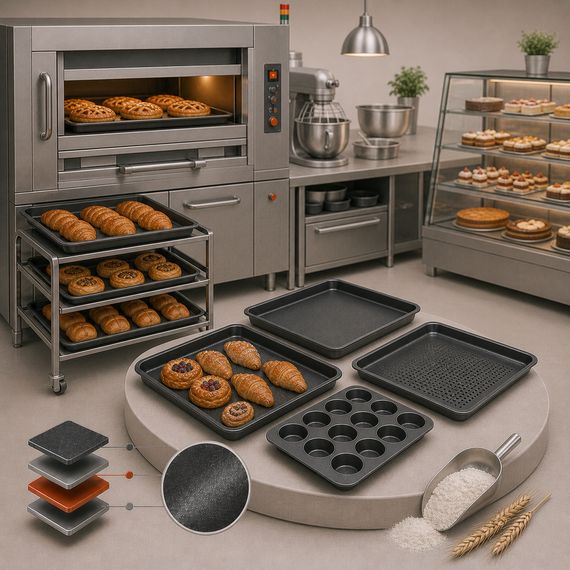
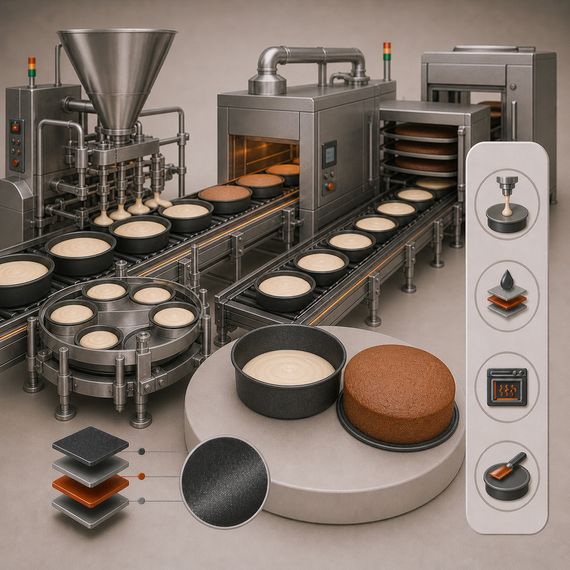
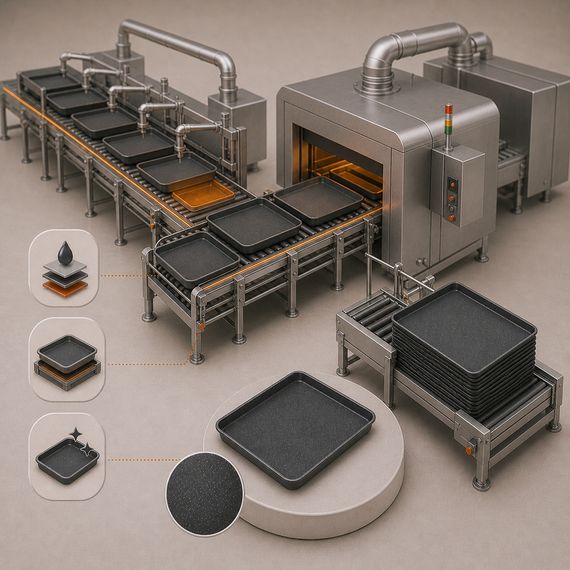
Bakery and pastry production place different demands on pans, moulds and their coatings. Bread dough, sweet batters and sugar-rich mixtures do not release or leave residues in the same way. Equipment selection therefore needs to reflect the product and the production routine, not just the tray’s outline.
Start with the product and process
Record the recipe type, product shape, filling weight and release method. Include the baking cycle and what happens before and after it: loading, cooling, demoulding, washing and stacking can all affect the working surface. A recurring problem may involve handling or cleaning as well as coating wear.
Choose a surface for the equipment
PTFE-based and other non-stick systems are discussed in this category, but their names do not establish equivalent performance. The proposed system must suit the substrate, geometry and conditions of use. Detailed moulds and broad flat trays can require different preparation and inspection considerations.
- Check equipment dimensions against racks, ovens and handling systems.
- Describe release difficulties and the areas where residue accumulates.
- Identify cleaning products, tools and the established cleaning method.
- State the food-contact documentation required for the intended use.
Assess renewal before replacing equipment
If the surface is worn but the body remains suitable, recoating may be an option to investigate. Distorted trays, damaged rims or cracked moulds need a separate assessment. Photographs and a clear description of the problem help establish whether the next discussion should concern a new pan, coating renewal or operating practice.