
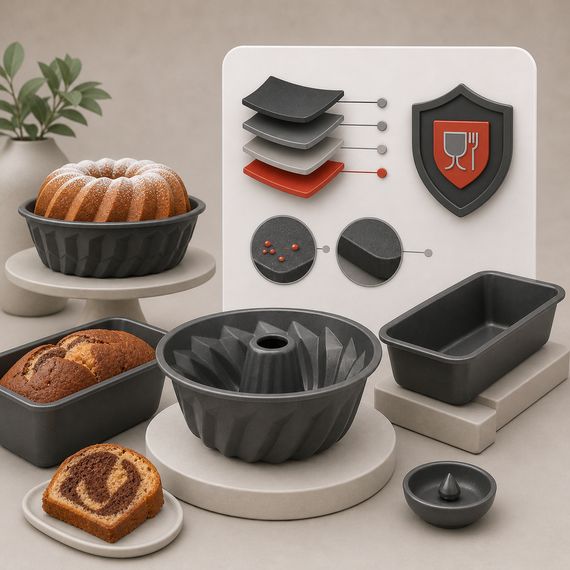
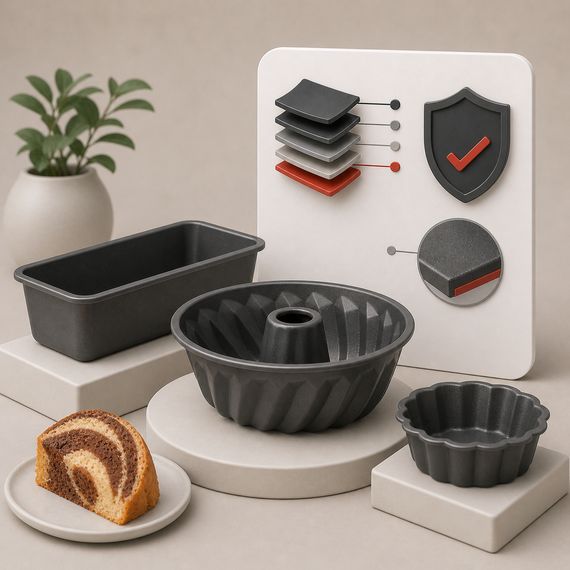
Coating cake molds for the actual recipe
Cake mold coating should be selected with both the mold geometry and the batter in mind. Deep cavities, fluted surfaces and fine details create different release conditions from a plain shallow pan. Sugar, fat and egg content are relevant, but none is a substitute for testing the complete recipe.
Assess release and cleaning together
Describe whether damage occurs during baking, cooling or removal from the mold. Photograph affected areas and note where deposits remain. The evaluation should include the finished cake surface as well as the condition of the mold after release.
Do not assume that a coating eliminates release agents, flouring or every cleaning step. Those decisions depend on the recipe, mold and instructions for the specified surface. Trial the proposed method before changing the production routine.
Inspect complex shapes before refurbishment
Check corners, recesses, rims and any assembled sections for distortion or structural damage. Agree how the coating will be inspected in areas that are difficult to reach or measure. Repairs and dimensional checks should be resolved before the surface is renewed.
Send mold dimensions, photographs, quantities and the baking and cleaning conditions with the enquiry. Confirm operating limits and relevant food-contact documentation for the finished system. The purpose of a representative trial is to establish a usable release and care procedure, not to promise identical results for every cake formulation.