
Food processing pan coating
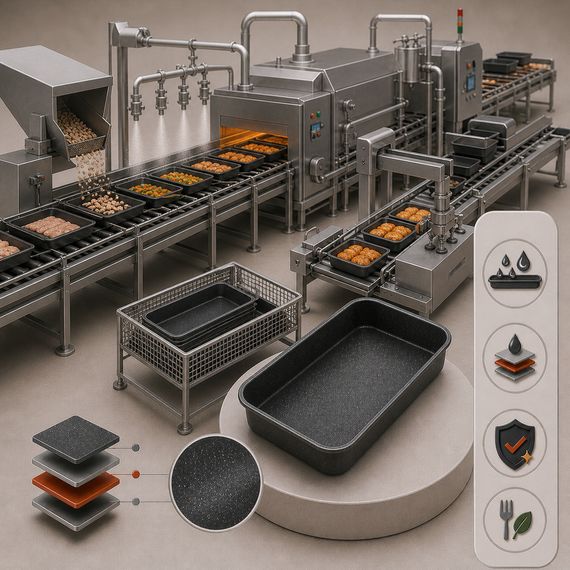
For food processing pan coatings, the process stage matters as much as the product type. A container for marinating meat, a mold for shaping cheese, and a pan for cooking a prepared meal have different contact conditions. Define coating needs around these conditions rather than assuming one surface system suits all foods.
Release from the surface is a priority in confectionery and chocolate production, while product acidity and contact duration are part of the assessment for fruit-processing trays. For pans moving into cooling or freezing, also record the sequence of temperature changes. A general material temperature range alone does not establish suitability for this operating cycle.
The cleaning program is part of coating selection
A food-contact surface is not used only during production; it also undergoes detergent cleaning, rinsing, and sanitizing. If clean-in-place cleaning or machine washing is used, provide the chemical name, concentration, temperature, and contact time. Do not assume every nonstick coating is compatible with every cleaning program.
- Separate cooking and transfer pans by their intended use.
- Mark food-contact surfaces and connection areas.
- Record metal damage separately from coating wear.
- Include the existing cleaning program in the technical assessment.
Assess food contact and product release separately
Easy product release does not establish the coating’s suitability for food contact. The compliance file must be tied to the selected formulation and conditions of use. Likewise, a management system certificate should not, on its own, replace compliance documentation for a particular pan. The plant’s quality team should review the documentation’s scope alongside the purchasing specification.
An inquiry to Powerpan should include the product group, contact duration, cooking and cooling conditions, pan quantity, and damage photographs. For bodies considered suitable for renewal, surface preparation and coating steps are planned for the system. Bent, cracked, or severely corroded components require a separate decision.
During the return-to-production trial, monitor where residue forms, how the product releases, and surface appearance after cleaning. Continue cleaning verification between product batches; nonstick properties should not be presented as automatically preventing cross-contamination. Remove pans showing coating separation from use and refer them for a quality review.