
Evaluating the cost of baking tray refurbishment
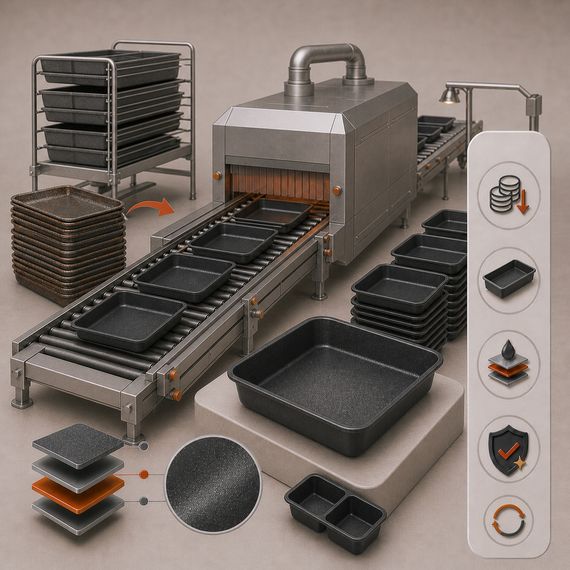
Economical baking tray refurbishment is an option to consider against buying new trays when the existing tray’s sound body can be retained. The coating price alone does not show whether refurbishment is economical. Shipping, preliminary inspection, time out of production, and performance in subsequent use must be assessed together.
Use the same scope for comparison
The dimensions, material, and intended use in the quotation for new trays should match those of the refurbishment option. Comparing products with different shapes or bodies solely by unit price can be misleading. If some existing trays are rejected during inspection, the cost calculation should be based on the number accepted.
| Expense | Role in the refurbishment calculation |
|---|---|
| Coating and inspection | Calculated according to the scope of the quotation. |
| Shipping and packaging | Outbound and return shipping are considered together. |
| Spare tray requirements | Included in the production plan for the maintenance period. |
| Unsuitable bodies | The replacement option is calculated separately. |
If the body is warped, cracked, or severely corroded, a low coating price is not sufficient justification. Refurbishment does not count as repairing mechanical damage. Distinguishing sound metal from a worn surface prevents further investment in an unusable part.
Make performance expectations specific
Baseline data should be collected on product release, the amount left in the mold, and cleaning requirements. The refurbished tray is tested with the same product and oven conditions. A surface that looks new does not demonstrate that its previous performance has been fully restored. If cleaning or the recipe is changed at the same time, the scope of the comparison should also be recorded.
The information sent to Powerpan should include tray types, quantities, dimensions, metal, and photographs of damage. System selection should be based on temperature, food contact, and cleaning-agent conditions. Along with the price, request the scope of inspection, documentation, maintenance instructions, and delivery.
Track the investment decision
Keeping records of the number of trays accepted after refurbishment and their use allows more realistic calculations for subsequent orders. Unsupported savings percentages or fixed payback periods should not be used. Lead times for new purchases and refurbishment are verified separately. When batch planning, spare equipment, and quality acceptance are considered together, the economic decision rests on total cost of use rather than a single price.
The price evaluation should also explain the scope of testing and acceptance. Returning an unsuitable batch can change the shipping and downtime calculation. Clarifying how inspection results will be reported and what decisions will apply to bodies removed from service allows a purchasing comparison that goes beyond the initial price.