
Resource optimization in baking tray coating
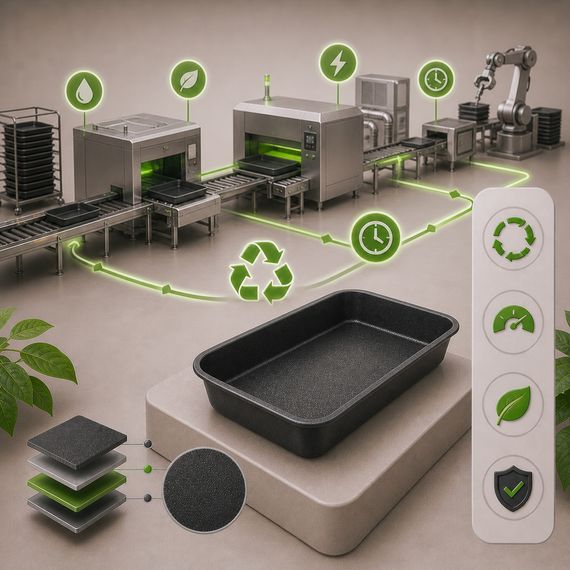
The aim of resource optimization is to understand the inputs used for the same accepted production output. A tray coating’s effect on those inputs cannot be inferred from a single property. Cleaning, product loss, maintenance, and equipment refurbishment should be measured separately, with changes evaluated alongside production volume.
Separate cleaning inputs
If less product remains on the surface, cleaning requirements may change. Whether this actually reduces water, detergent, or energy consumption must be established through measurement. A nonstick surface does not justify eliminating a validated cleaning and sanitation program. Chemical concentration or washing time should not be reduced simply because the surface looks cleaner.
Cleaning water quantity, water heating, and washing equipment operating time are different inputs. Recording the number of trays used in the same shift allows changes to be examined per unit of use. Fixed activities such as startup and shutdown cleaning should also be explained within the total calculation.
Labor and product loss
Labor required for product release, residue removal, and tray inspection can be tracked separately. Assess whether time gained at one stage is transferred as a loss to another operation. If product loss records cover only the amount sticking to the tray, that figure should not be presented as the same indicator as total production waste.
- Record water and chemical quantities.
- Track oven and cleaning energy separately.
- Record accepted output and product loss together.
- Include refurbishment, shipping, and spare equipment expenses.
Isolate the coating’s effect
In a before-and-after comparison, keep the recipe, oven load, operating time, and cleaning method unchanged. If a new oven or different washing program is introduced at the same time, the entire change cannot be attributed to the coating. The energy bill alone is not a consumption indicator either; price changes should be addressed separately.
Baseline records and equipment information can be shared during technical discussions with Powerpan. Coating suitability should be based on the product, temperature, and cleaning conditions. No time-based or percentage promise should be made without a verified savings result. Resource optimization is an operational assessment that includes regular data collection and maintenance decisions alongside surface selection; product quality and hygiene conditions should not be left out of the calculation.
Labor calculations can distinguish time spent cleaning from time the equipment waits. If a tray requires less manual handling but spends longer in the washing queue, the overall production flow may show a different result. Operating data should reflect that distinction. Resource calculations should not assume that a change in one stage is a gain for the entire line.