
Evaluating oven pan coating service life
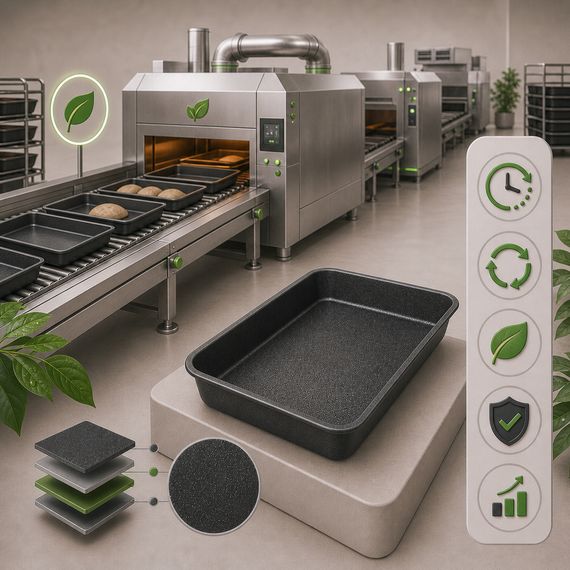
Expectations for a long-lasting oven pan coating must be evaluated under specific operating conditions. Moving the pan into and out of the oven, transporting it on racks or conveyors, and the washing routine change the demands on the surface. Coating life cannot be determined solely by the product name or number of applied layers.
What differences does the oven type make?
In a tunnel oven, the pan passes through heating and cooling zones along the line. In a rotary rack oven, pan and rack placement are examined; in a convection oven, airflow and the loading arrangement are reviewed. In systems with direct contact at the base, wear on the exterior surface must be assessed separately. These differences can produce different operating histories for the same coating.
The oven temperature setting alone is not enough information. Baking time, empty heating, proximity to the heat source, and subsequent cooling conditions should also be shared. Not every PTFE or ceramic-based coating should be assumed to have the same temperature limit.
Measure service-life expectations
- Record the pan or batch ID and refurbishment date.
- Monitor product release using the same recipe.
- Specify whether wear is concentrated at the edge, base, or connection.
- Record changes in washing and stacking methods.
Longer cleaning times or product sticking in a particular area may warrant inspection. Discoloration alone is not a fixed end-of-life criterion. If peeling or blistering occurs, however, the pan should be removed from service. A calendar-based refurbishment interval should not replace actual operating data.
Evaluate surface preparation and maintenance together
When discussing the work with Powerpan, share the condition of the metal body, the history of the old coating, and the new operating conditions. The surface preparation method is selected according to the metal and chosen system. A thicker film or multilayer structure does not always mean a longer service life; technical documentation and a suitable trial are needed.
Food-contact documentation and cleaning instructions should be included in the order scope. Metal scrapers, abrasive brushes, and stacking arrangements that allow surfaces to rub against each other are examined as possible causes of existing damage. Monitoring should continue after refurbished pans are accepted in actual production. The basis for a service-life claim is not a promised period, but recorded operating conditions and the surface’s behavior under those conditions.
Marks on the exterior base where it rubs against the oven rack should be recorded separately from wear on the interior food-contact surface. If early damage occurs in one area, examine how the pan is transported and how it contacts the rack. Good performance of the interior surface does not by itself establish suitable exterior mechanical fit, just as a sound-looking exterior does not establish adequate product release.