
Nonstick coatings: understanding operating limits
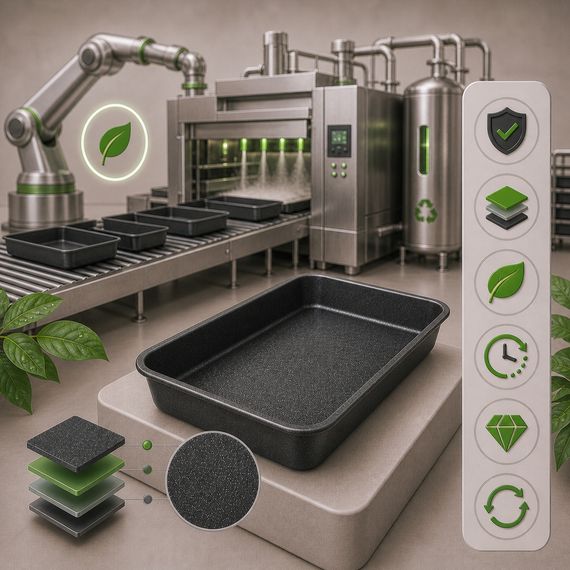
The term permanent nonstick coating should not be used to mean that a surface will never wear or will remain nonstick for life. Industrial trays face different demands during baking, handling, product removal, and washing. Continued nonstick performance is an expectation that can be monitored under specific operating conditions.
An initial trial does not establish a long service life
Easy product release from a new surface provides initial information. Whether that behavior is maintained through repeated use must be monitored separately. If the recipe, baking settings, or cleaning method change, the comparison conditions also change. Records should therefore be kept by tray or batch ID.
A coefficient of friction cannot establish zero product loss, unlimited use, or cleaning by wiping alone. Food release and hygienic cleaning are different tasks. The facility’s washing and sanitation program must continue in a way compatible with the selected coating.
Coating system and operating instructions
PTFE, silicone-based, and ceramic-based systems should be evaluated using their own technical documentation. Brand names and layer counts are not evidence of permanence. Operating temperature, food contact, and cleaning-agent compatibility must be tied to the specific formulation. Food-contact compliance does not replace durability or slipperiness testing, nor can it be inferred from those tests.
- Monitor product release and the amount left in the mold.
- Record contact with metal tools and during stacking.
- Check surface condition after cleaning.
- Apply the procedure for removing equipment from service when peeling or blistering occurs.
Oil and parchment paper
Whether oil or parchment paper can be reduced after recoating should be established through a product trial. Oil’s function in the recipe differs from its use as a mold release agent. A decision to eliminate a consumable entirely should not be made without evaluating product quality and process suitability.
When contacting Powerpan, share mold geometry, metal, product, and operating conditions. Initial acceptance and subsequent monitoring can be planned separately. Following the new surface’s maintenance instructions matters, but even correct maintenance does not create a guarantee of unlimited life. Refurbishment decisions should be based on surface damage, product release, and actual operating history.
Monitor areas where cleaning and handling equipment contact the surface. Wear on an edge that does not touch the product may still warrant a coating-integrity inspection. Not all trays in the same batch should be expected to wear at the same rate. When operating intensity and line position are recorded, refurbishment needs can be determined from actual surface condition rather than a blanket assumption of permanence.