
Evaluating cooking surface energy use
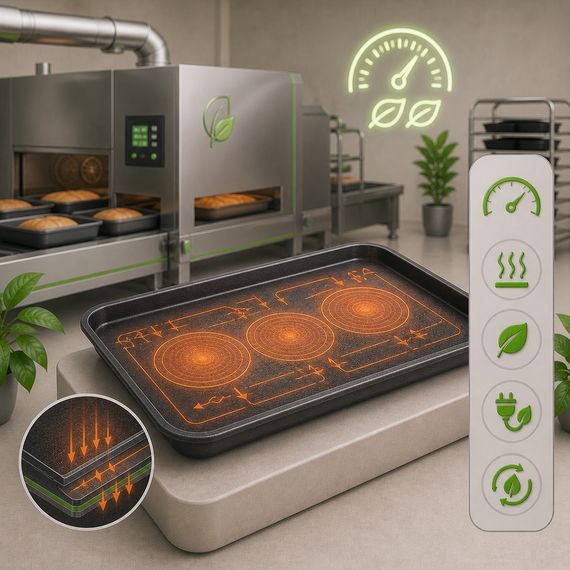
When evaluating an energy-efficient cooking surface, the question is how much energy is used to obtain the same accepted product. Applying a new coating does not by itself demonstrate lower consumption. Oven load, operating time, product loss, and cleaning energy should be examined separately.
The right comparison unit
The U.S. Department of Energy defines energy intensity as the energy required per unit of output. Lower intensity is not always caused by equipment efficiency; changes in production structure and behavior can also affect the result. DOE’s explanation of energy intensity makes this distinction.
Keep product type, load quantity, oven program, and acceptance criteria the same in the baking trial. Total energy may decrease when production volume falls; this does not prove that the surface is more efficient. Record usable product quantity alongside consumption.
Examine the surface and body together
Metal type, tray geometry, and product placement are part of the baking assessment. Evaluate the coating system’s heat transfer and surface behavior using its own technical data. A generic PTFE emissivity or thermal conductivity value does not explain the energy performance of a finished coated tray. The relevant film structure and an actual operating trial are needed.
- Record oven consumption and operating time.
- Specify startup and shutdown activities separately.
- Track accepted product and product loss quantities.
- Separate cleaning energy from baking consumption.
Verify possible changes in cleaning
If product residue decreases, washing requirements may change. However, no energy savings conclusion should be stated without measuring water heating and dishwasher consumption. Shortening cleaning time must remain consistent with the facility’s hygiene and quality acceptance. A surface being easy to wipe is not enough to change the sanitation program.
Current tray details, the product recipe, and the comparison plan can be shared during discussions with Powerpan. Coating suitability and energy performance should be written as two separate acceptance topics. A matched trial that delivers the same quality allows consumption changes to be assessed. Without measurement, no specific savings percentage, shorter baking time, or lower oven setting should be promised.
Trials of the same duration may not yield directly comparable consumption figures. Record the oven’s starting temperature and production preparation activities. If only steady baking is measured, explain that boundary in the report. If the whole shift is monitored, preparation, waiting, and shutdown should be included within the same scope. Consumption figures collected within different boundaries should not be combined into a single savings result.