
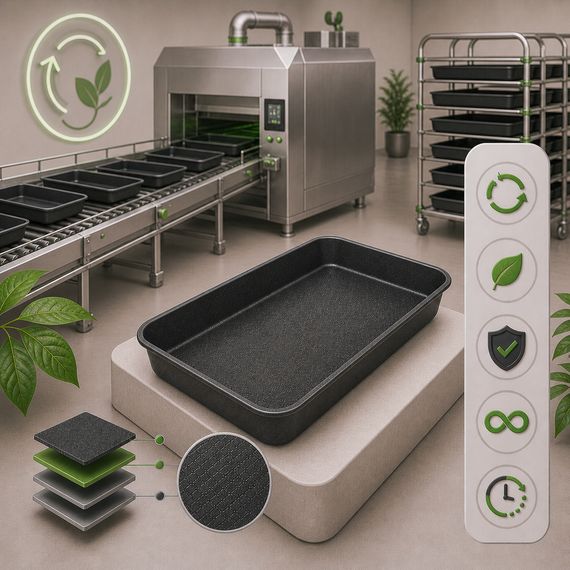
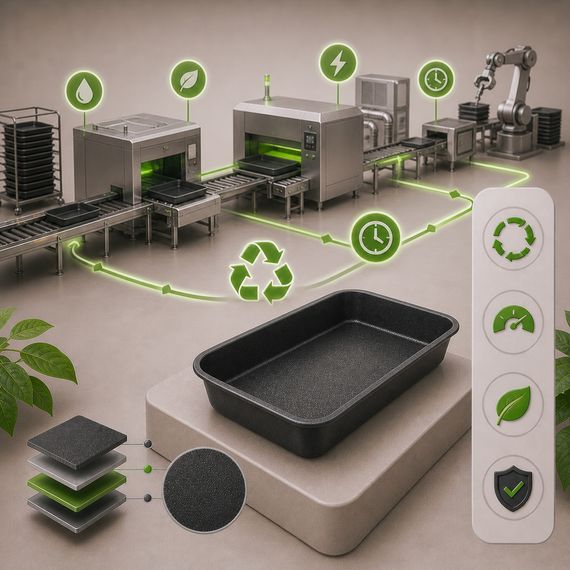
Material savings in baking concern what is consumed to produce usable finished goods. Product left on a pan, damaged items, disposable liners and worn equipment can all contribute to that material balance. A coating’s contribution should be evaluated against actual production records, not assumed from a non-stick label.
Identify the material being saved
Distinguish food losses from consumables and equipment replacement. Improved release may affect damaged-product waste, while a change in cleaning practice may affect water or cleaning-agent consumption. These are separate outcomes and need separate measurements.
- Record the amount and cause of rejected or damaged product.
- Track liner and release-agent use where these are part of the process.
- Measure cleaning inputs without compromising the cleaning procedure.
- Compare pan renewal with replacement where the body remains suitable.
Compare like-for-like production
A change in recipe, batch size or operating routine can alter consumption independently of the coating. Compare equivalent products and conditions, and state the period covered by the records. A trial may show an improvement in one area without demonstrating savings throughout the whole process.
Include renewal and maintenance
Recoating may allow a suitable metal body to remain in service, but preparation and coating also use resources. The assessment should include those inputs rather than treating renewal as impact-free. Do not remove liners, lubricants or cleaning steps solely to meet a savings target; any process change needs evaluation for the particular product and equipment.