
Material-efficient coating and application control
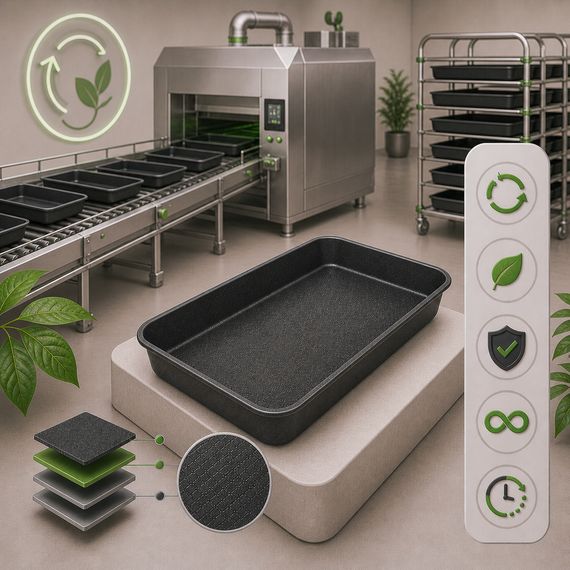
Material-efficient coating aims to achieve the required surface performance with less loss and rework. This does not mean applying the coating as thinly as possible. Film thickness and application structure must meet the selected system’s technical requirements.
Application according to geometry
A flat tray, deep sandwich loaf mold, tapered cake mold, and wok do not offer the same surface access. Check for insufficient application in narrow recesses, buildup at edges, or variation across a broad base. Total material quantity alone does not demonstrate that all surfaces are properly coated.
Masking areas that will not be coated and positioning the part during application are part of the technical scope. Material that misses the target during spraying, known as overspray, should be tracked separately from material transferred to the surface. Whether it can be reused depends on formulation and process conditions; the same assumption cannot be made for every material.
Consider thickness and quality together
The required thickness range is determined from the product’s technical documentation and application conditions. A thicker film is not always more durable, just as a thinner film is not automatically more efficient. Select an inspection method suitable for the metal and coating structure, with measurement points representative of the geometry.
- Record initial and consumed material quantities.
- Define the coated area or part group.
- Separate accepted parts from those requiring rework.
- Examine thickness distribution and application losses together.
The right unit for comparison
Comparing trays of different sizes solely by consumption per piece can be misleading. Differences in area, geometry, and system should be included in the assessment. Consumption per accepted part under the same conditions may be more informative than the total material purchased. Even if total consumption rises because production increases, unit consumption should be examined separately.
When discussing the work with Powerpan, share the part drawing, coating areas, and operating conditions. Do not assume that a particular application or recovery arrangement exists at the facility without documentation. Technical quality, food-contact compliance, and material use are separate inspection topics. A savings percentage can only be stated when the baseline data and comparison scope are clear. Application efficiency should be evaluated without compromising the functional surface or necessary inspection.
Narrow mold details and broad flat areas should be represented separately in the measurement plan. A satisfactory result at one easily accessible point does not show that the entire surface has the same structure. Film appearance and measurement records should be evaluated together. If product release and surface acceptance are maintained in a trial that reduces material use, the data provide a more meaningful basis for comparing efficiency.