
Pastry oven pan coating and product release
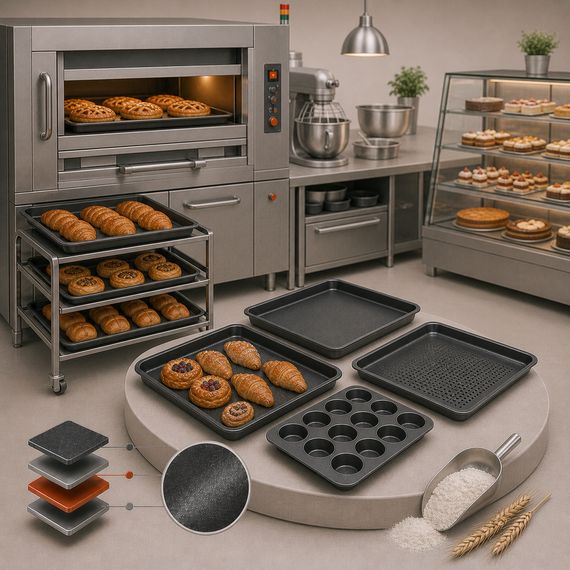
When considering pastry oven pan coating, even molds used by the same bakery may have different needs. A flat cookie tray, a deep cake mold, and a fluted tart edge contact the product differently. In a coating inquiry to Powerpan, describe both the product and mold shape instead of simply calling it a pastry pan.
The recipe and release method
Surface residue may differ with recipes containing eggs, sugar, fat, or fillings. When and how the product is removed from the mold also matter. Assess baking, cooling, and release procedures without attributing sticking solely to the coating name.
Caramel or similar residue does not mean that a particular system should be selected automatically. Compare alternatives against the actual recipe and operating limits. A nonstick surface does not guarantee damage-free release of a fragile product under all conditions.
Preserving shape details
A tart’s fluted edge, the inner area of a ring mold, or recesses in a specially shaped mold require separate examination. Body dents and edge damage are different issues from coating renewal. Assess the metal’s condition, preparation method, and feasibility of applying the new system together.
- The mold’s overall shape and depth information.
- Corners or edges where product remains.
- Existing coating and body damage.
- The release tools used.
- The cleaner and residue removal method.
Sample assessment
Keep the recipe, baking conditions, and cooling procedures the same during the trial. Observe product surface integrity, how well mold details are reproduced, and remaining residue after release. Results from a flat tray should not be directly transferred to a complex mold.
PTFE-based, silicone-containing, and differently reinforced systems should be assessed using their technical documentation. A trade name alone does not prove suitability for high temperatures or metal tool use. Food-contact scope is also reviewed separately from in-use performance.
For a mold with a removable base or multiple components, record each component’s identifier and how it fits. Observe release from the sidewall separately from release from the base. Include residue remaining at the joint in the cleaning plan.
Maintenance and recoating planning
Instead of scraping the coated surface clean, use tools and methods that follow the relevant maintenance instructions. If peeling occurs, remove the mold from service and begin a quality review. Send Powerpan the quantity, mold photographs, and production schedule. Acceptance of single items, turnaround time, and service scope must be confirmed separately; do not assume that every special shape can definitely be coated.