
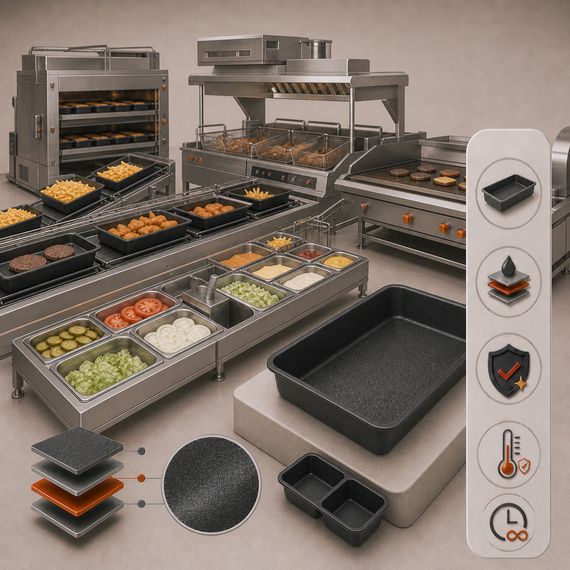
Ready-to-eat and fast-food operations use surfaces for cooking, holding, assembly, and cleaning. Equipment in these stages has different requirements, even when it is used for the same menu item.
Assess the working surface in context
Identify the equipment and whether the issue concerns release, residue, visible damage, or cleaning effort. Include the food, operating cycle, utensils, and cleaning routine. A coating should be considered for a defined component, not as a universal treatment for every appliance in the kitchen.
Keep equipment requirements in view
Contact plates, molds, trays, and heated assemblies can have different construction and dimensional requirements. Surface changes need to remain compatible with the appliance’s function and care instructions. A coating cannot correct a damaged heater or an unsuitable equipment design.
- Record the model and component dimensions.
- Photograph the full item and any affected area.
- Explain when the problem appears during service.
- Identify the required food-contact documentation.
Evaluate any proposed treatment against the actual use and cleaning conditions. Faster service, reduced cleaning time, and longer equipment life require relevant evidence; they should not be assumed from the presence of a non-stick surface.