
Old baking pan refurbishment solutions
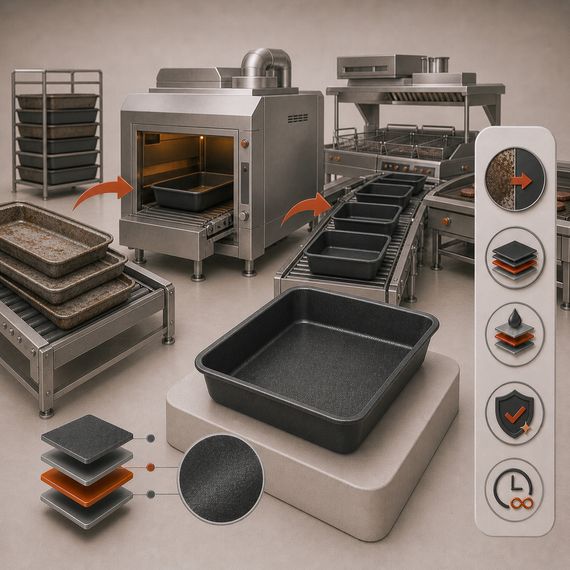
Old pan refurbishment solutions start with the question of whether the existing body can be retained. Worn coating, base distortion, and corrosion do not require the same intervention. Long use alone is not a reason to replace a pan; inspect the surface and metal structure together.
Classifying damage correctly
| Observation | Assessment |
|---|---|
| Recurring sticking | Examine recipe, cleaning, and surface condition together. |
| Peeling or blisters | Segregate the pan for quality and coating reviews. |
| Corrosion | Assess metal loss and suitability for renewal. |
| Distortion or cracks | A mechanical decision independent of coating is required. |
Discoloration alone does not show that a coating is worn out. Monitor appearance alongside product release and cleaning behavior. Conversely, continued use of a pan showing surface separation until its scheduled maintenance is not an appropriate assumption. Segregate the affected equipment and apply the plant’s quality procedure.
How is the renewal process defined?
After inspection, plan removal of the old coating, metal surface preparation, application of the new system, and inspection stages. The stripping and preparation method depends on the metal type and surface history. Applying the same heat-treatment or blasting procedure to every pan is not appropriate; this work must be performed under professional process conditions.
When speaking with Powerpan, share the oven program, product recipe, and washing conditions for the new use. Select PTFE or another system based on documented service limits. The coating name or a management certificate must not replace the food-contact file.
Scheduling fleet renewal
Separating pans by condition and use group allows more realistic planning of maintenance batches. A fixed inspection interval does not apply to every facility. Use operating intensity, previous damage records, and spare pan quantities to help determine inspection frequency.
Acceptance after renewal should use the actual product, with mechanical compatibility verified separately. Do not assume the pan is equivalent to a new body. Confirm delivery date, shipping, and batch size during quotation. Sharing use instructions with teams is part of maintenance aimed at reducing recurrence of the same causes of wear on the renewed surface.
The cavity base of a bread mold, long sidewall of a sandwich mold, and recesses of a pastry mold can be photographed separately. These area-specific records allow comparison between defects before renewal and later service marks. Match group information to packaging to prevent parts from becoming mixed during shipping, and use the same names on the delivery list as in the plant inventory.