
Cooking equipment surface coating
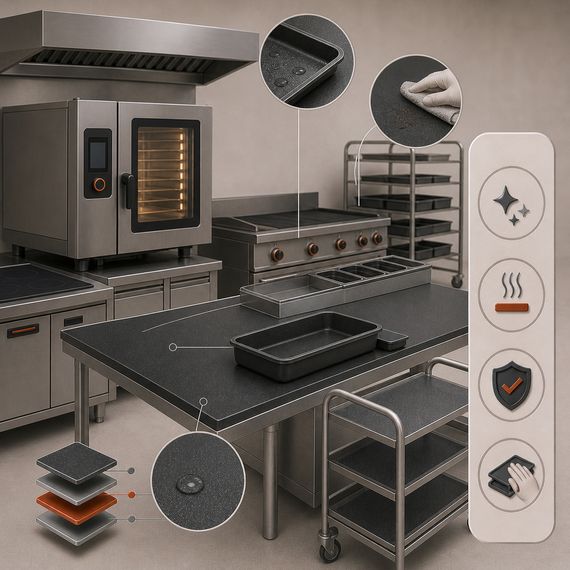
Surface coating for cooking equipment begins with assessing the area where food contacts the surface and the residue that forms there. The broad base of a flat tray, channels in a ribbed grill plate, and small recesses in a waffle mold are the determining features. The same nonstick expectation creates different inspection points in different geometries.
Geometry determines the application scope
The inside surface of an oven pan and its outside base are not coated for the same purpose. The inside surface supports product release, while contact and friction between the outside surface and the oven rack need separate assessment. Clearly mark the inside, outside, edges, and connection areas in the coating request. Automatically including every area in the coating scope may not be necessary.
Examine where grease and product residue accumulate on ribbed surfaces. In detailed molds such as waffle molds, preserving the pattern and being able to clean every recess matter. Photographs taken before renewal show whether recurring sticking is associated with a particular area.
What information informs the surface system?
- The food in contact with the surface and residue formed during cooking
- Heat source, operating time, and the possibility of heating the surface without a load
- The metal body’s material and the condition of the existing coating
- Contact with spatulas, brushes, and washing chemicals
PTFE, silicone-based, and ceramic-based systems should not be compared by name alone. Actual service limits depend on the coating formulation and the component receiving it. Direct flame, intense radiant heat, and use inside fryers in particular require separate technical assessment. A baking-tray trial does not establish suitability for these applications.
Inspection after renewal
When discussing surface renewal with Powerpan, acceptance criteria can be defined for product release and cleaning needs. Run the trial with the same recipe and cooking program; record sticking locations and product damage. Coating thickness or appearance alone does not show that cooking performance is adequate.
Use cleaning tools and chemicals that comply with the coating instructions. Abrasive scraping can worsen existing damage; choose the residue-removal method accordingly. Segregate equipment showing peeling or blistering for inspection. Considering a sound body, suitable surface preparation, and a trial under actual conditions together provides a clear basis for the renewal decision.