
Industrial kitchen pan coating
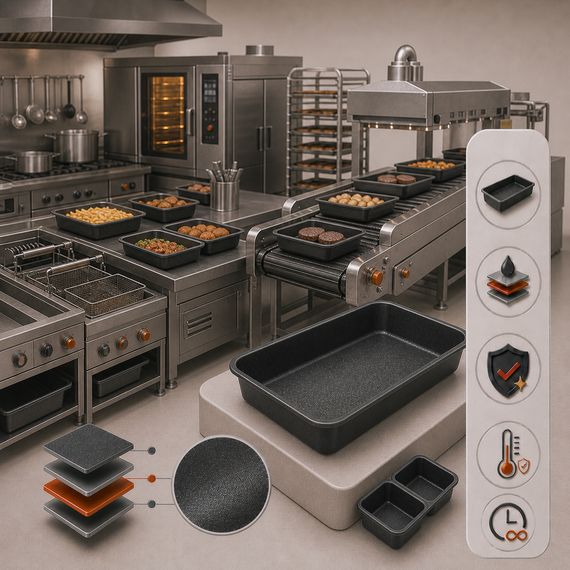
For industrial kitchen pan coating, the pan type is starting information, not the entire basis for a decision. Examine product release in an omelet pan, the broad base in a crepe pan, and combined use of the base and sidewalls in a wok. For saute and grill pans, assess the heat source and working method separately.
Body condition comes before the surface
Aluminum, steel, and cast-iron bodies are not automatically processed with the same surface preparation method. Base distortion, a loose handle connection, cracks, or substantial corrosion are assessed separately from coating wear. A new surface does not resolve these mechanical issues or restart the pan’s entire service life.
Photograph the base and sloping sidewalls of a deep wok, and the channels and corners of a ribbed grill pan. Seeing a recurring wear pattern rather than a single scratch helps identify contact with metal utensils or other pans during stacking. The same damage may recur if cleaning practices remain unchanged.
Describing heat conditions accurately
A burner setting or oven temperature alone does not show the pan surface’s actual conditions. Separately specify preheating without a load, direct flame, and brief high-heat use. The name PTFE or ceramic does not mean suitability for every sauteing or grilling application. Verify the selected system’s service limits in relation to the equipment.
- Provide pan type, outside dimensions, and body material.
- Specify the product cooked and operating time.
- Record spatula, scraper, and washing methods.
- Clarify whether handles and other components need removal.
Use after renewal
When speaking with Powerpan, request food-contact documentation, the application scope, and care instructions. Perform the acceptance trial with the pan’s actual product and operating conditions. Nonstick properties do not mean that cleaning can consist of wiping alone or that cooking oil can be eliminated entirely.
The instructions should specify coating-compatible tools and cleaners. Prevent surfaces from rubbing when stacking pans, and follow the manufacturer’s instructions regarding sudden temperature changes. Remove pans showing peeling or blisters from service. Assess renewal frequency from body condition, surface monitoring, and actual service history rather than a fixed schedule.