
Professional kitchen equipment coating
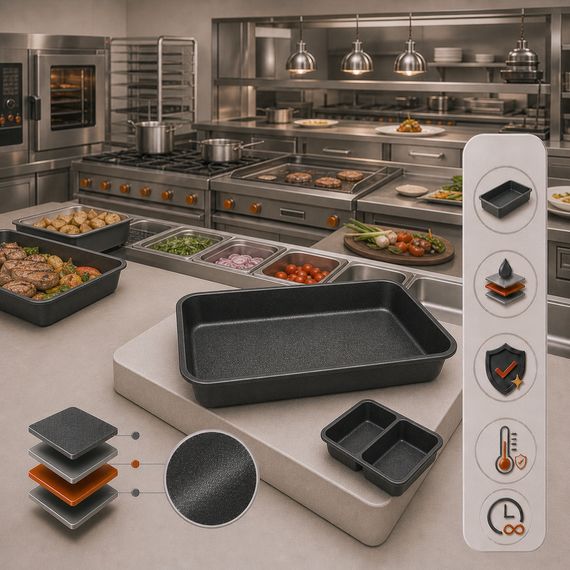
A surface-renewal decision in a professional kitchen should be based on what the equipment does. A preparation container, oven tray, cooking pan, and hot-holding vessel have different contact durations and cleaning methods. A single coating recommendation for all kitchen equipment does not address these differences.
Identifying the source of the problem
Product sticking may be associated with a worn surface, but the cooking program, recipe, and cleaning residue also need examination. Remove equipment showing scratches, peeling, or blisters from use. Mechanical defects such as a bent base or damaged handle require a maintenance decision separate from the coating request.
When contacting Powerpan, share the metal material, dimensions, and conditions of use along with equipment type and damage photographs. Include mixer or scraper contact for preparation containers, the heat source for cooking plates, and oven and stacking conditions for trays in the assessment. The size of a large piece of equipment alone does not show that it can be coated.
Application scope and document review
Define the inside surface, outside base, edges, and connection areas separately. Consider manufacturer instructions for moving or precision-fitting parts. Verify the coating system’s temperature and cleaner limits from its own technical documentation. The name PTFE, silicone, or ceramic cannot substitute for documentation of suitability for every application.
- Match the food-contact file to the conditions of use.
- Specify surface preparation and inspection scope in the quotation.
- Clarify responsibility for disassembly, shipping, and assembly.
- Share maintenance instructions with equipment operators.
Renewal within the service schedule
When comparing new equipment purchases with coating renewal, consider body condition, time out of production, and spare equipment needs together. Do not assume every worn part can be renewed economically. Establish lead time and batch size after inspection.
Before returning equipment to production, run a trial with the actual product and record release behavior and surface condition after cleaning. A nonstick surface should not be thought to eliminate the hygiene program. Wiping with a paper towel alone is not an adequate cleaning method for every kitchen operation. Tracking maintenance history by equipment identification bases the next renewal decision on service data.