
Large kitchen equipment coating
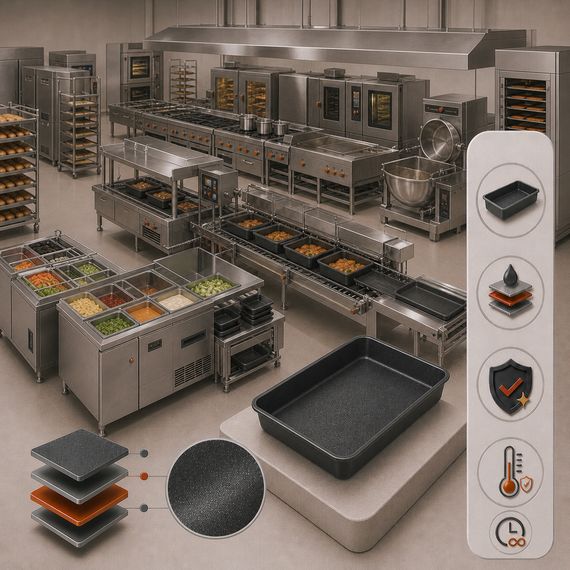
A coating assessment for large kitchen equipment starts with the component’s function before its size. A cooking kettle, wide oven pan, mixing vessel, and hot-holding container are not exposed to the same surface loads. Specify operating duration, product contact, and cleaning method separately.
Disassembly and access
Coating a large surface does not depend on outside dimensions alone. Examine access to the internal surface, narrow connections, weld areas, and whether the equipment can be disassembled. Do not automatically include a kettle’s internal surface, agitator blade, and drain component in the same scope. Moving and sealing parts require separate assessment.
Send Powerpan dimensions, weight information, part drawings, and photographs to request a feasibility review. Do not specify maximum processing dimensions or handling capacity without a current technical assessment. Do not assume on-site coating is possible either; clarify disassembly, shipping, and assembly conditions during quotation.
Distinguishing heat from mechanical contact
Contact with an agitator or scraper inside a kettle differs from a wide tray’s contact with an oven rack. The aim of reducing buildup and the aim of resisting wear cannot be assessed against the same criterion. For applications such as grills and fryers, separately examine the heat source, oil contact, and manufacturer instructions.
- Mark surfaces to be coated and connections to be masked.
- Provide the product, temperature, duration, and cleaning cycle.
- Report body deformation and corrosion separately.
- Identify who is responsible for checks needed after assembly.
What do acceptance checks cover?
Assess the coating system’s technical documentation and food-contact file alongside the conditions of use. Complete visual inspection of the broad surface by examining corners and connection areas. Film thickness and other inspections are determined by the applied system; a single measurement does not guarantee performance under all conditions of use.
When returning equipment to operation, check mechanical fit, operating movement, and surface behavior with the actual product. A coating does not constitute repair of a damaged metal body or an increase in production capacity. Give cleaning instructions to the operating team, and withdraw equipment showing surface separation for maintenance and quality review. This bases the renewal decision on a defined component and operating condition rather than an unspecified promise for large equipment.