
Bulk production oven pan coating
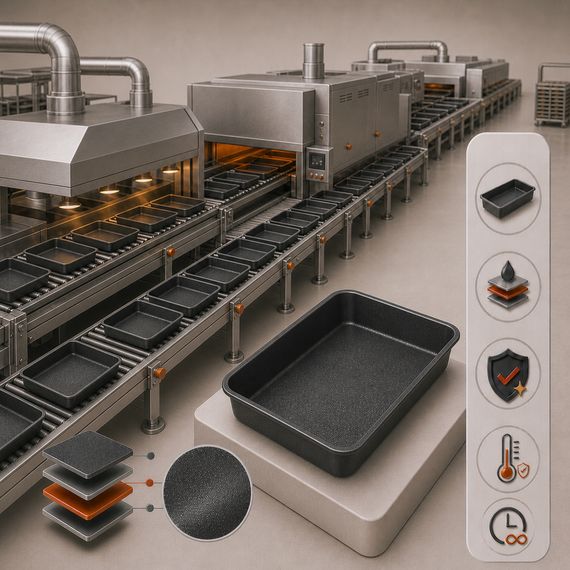
A coating plan for bulk-production oven pans starts by dividing the pan fleet into use groups. A deep meat-cooking vessel, flat borek tray, and muffin mold do not produce the same residue. The shared external standard for Gastronorm containers does not mean that every component needs the same surface system.
In GN containers, depth, perforations, and rim folds affect how they are used. Walls exposed to liquid for extended periods in a deep container are assessed differently from the base of a flat tray. Preserving openings and cleaning access matters in a perforated container. Specify these features in the quotation list.
Assessing the pan fleet
| Use group | Inspection focus |
|---|---|
| Meat and vegetable cooking | Depth, residue, and liquid contact duration |
| Gratins and oven-cooked dishes | Edge buildup and unloading method |
| Pastry production | Shape details and demolding |
| Bread and borek | Base surface and carrier compatibility |
Record body distortion, cracks, and corrosion separately from coating wear. If a batch contains pans made of different metals or with different histories, group the technical inspection accordingly. A coating should not be presented as a repair that turns a damaged body into a new pan.
Oven and washing conditions
Provide Powerpan with the oven program, steam use, product type, and washing-machine information. Tie coating selection to actual operating temperature and cleaner compatibility. Request a food-contact file for the specific surface system; do not accept a management certificate in place of product compliance documentation.
Run trial production with the same menu item and oven load. Record product release, the appearance of the product’s underside, and residue after washing. Pan renewal does not inherently correct uneven oven loading or an incorrect program.
Production planning during maintenance
If pans will be renewed in batches, define spare equipment and transport arrangements beforehand. On return, match pan identification with coating information and acceptance checks. Reduce friction between surfaces during stacking. Confirm delivery timing and batch size during quotation; do not plan service around an unverified daily capacity.