
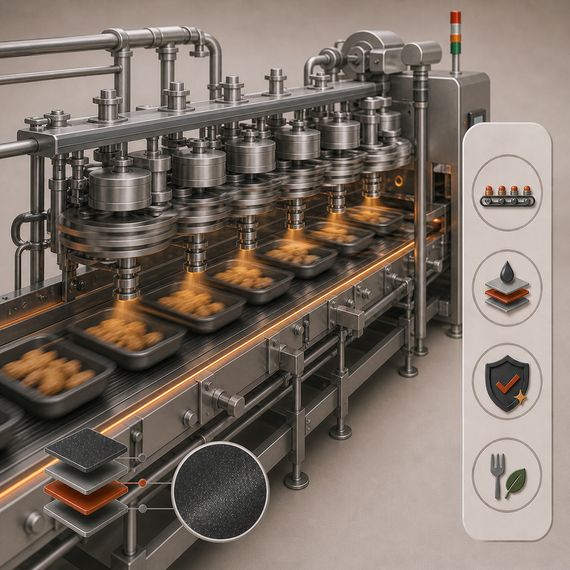
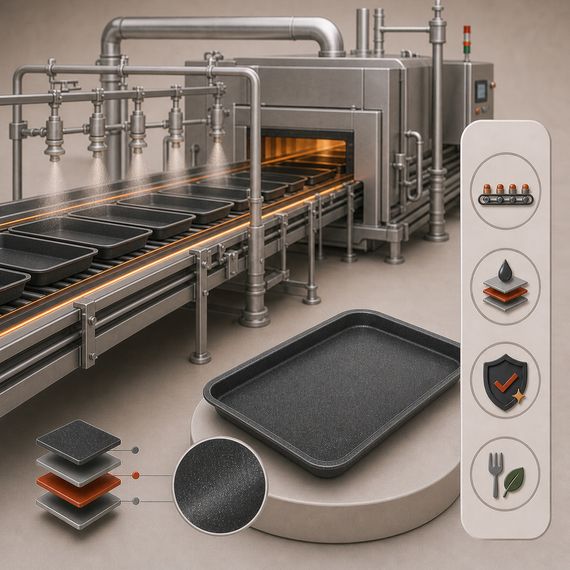
In a mass-production food line, the condition of one contact surface can affect the next operation. Deposits at a transfer point, inconsistent release from a mold, or damaged trays need to be understood in the context of the complete process.
Map the problem to a production stage
Identify the component and what happens immediately before and after contact. Record the product, line settings, cleaning routine, and frequency of the observed issue. Avoid treating every interruption as evidence that the entire line needs a different coating.
Specify repeatable equipment details
For pans and removable parts, keep drawings and revisions connected to equipment identification. Dimensions, support features, and clearances should be checked against the actual handling system. A surface change also needs to respect the component’s original mechanical purpose.
- Define the contact material and operating cycle.
- Describe movement, scraping, and other mechanical contact.
- State the required inspection and documentation.
- Agree what a representative trial would evaluate.
A coating can be assessed for a defined function, but uninterrupted operation, higher output, or reduced waste cannot be promised from the material name alone. Compare performance under controlled conditions and keep maintenance and cleaning requirements in the decision.