
Centralized production line coating
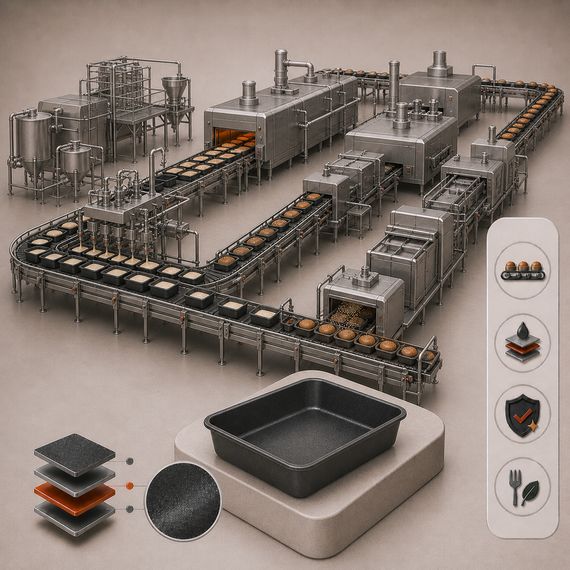
Coating a centralized production line requires a broader inventory review than renewing a single pan. Components used in cooking, cooling, transfer, and filling encounter different foods and cleaning conditions. Build the coating scope around components with defined functions, not a general promise covering the entire line.
Oven pans and cooking vessels in a central kitchen, mold pans on a bread line, and mixing and transfer components in sauce production may be subjects for assessment. These examples do not mean that every part can be coated. Equipment manufacturer limits need separate consideration for pumps, nozzles, and precision moving assemblies.
Line map and surface inventory
- Record the product each component contacts and the process stage involved.
- Specify cooking, cooling, and cleaning temperatures separately.
- Mark carrier connections and surfaces to be masked.
- Distinguish wear, body damage, and corrosion.
This inventory clarifies why similar-looking components may belong to different use groups. Contact duration and cleaning chemistry can differ between surfaces used in the hot and cold stages of the same product. Base technical selection on these differences.
Product changeovers and cleaning
A recipe or product-group change at a central facility requires separate verification of surface cleaning. A nonstick coating does not mean allergens or other residues are automatically removed. The cleaning method must be compatible with the coating system, and the plant’s quality controls must continue.
The file sent to Powerpan should include a line sketch, component photographs, quantities, dimensions, and cleaning program. Request food-contact documentation and use limitations for the selected system. Specifying whether surface wear occurs during conveying, scraping, or washing allows a more focused assessment.
Scheduling renewal around maintenance shutdowns
Spare equipment and planned downtime information matter as much as the total quantity to be coated. Divide components into batches by use group; establish shipping and return-to-production dates during the quotation discussion. Renewing the entire line at once may not be necessary.
Inspect the first batch under actual production conditions. Once product release, residue buildup, and mechanical fit have been recorded, the scope of later batches can be clarified. Remove equipment showing coating separation from use and refer it for maintenance and quality review.