
Spray coating technology: method and process assessment
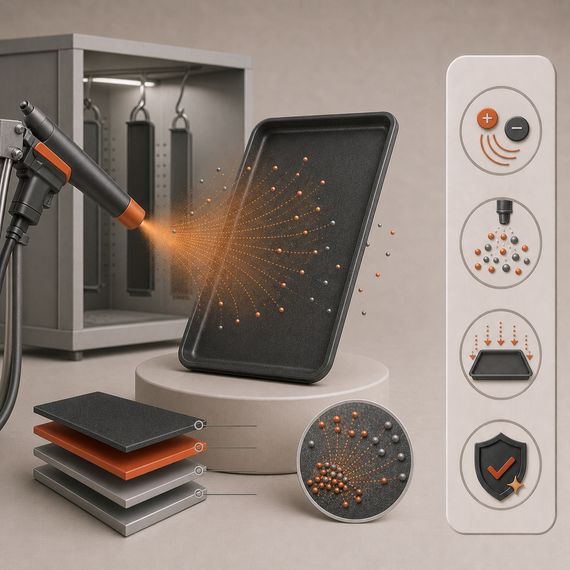
Spray coating is an application method in which material is distributed onto a surface by spraying. The resulting non-stick performance, chemical behavior, or temperature limit is not determined by the method’s name alone. The selected formulation, substrate preparation, and subsequent processing conditions also determine the finished film.
If an area needs masking, show it clearly in the quote and inspection plan. A connection surface and the surface exposed to the process may not serve the same function. Once application is complete, inspect the film at the mask boundary and any material remaining on the part. Method selection must meet the part’s assembly and operating requirements as well as appearance requirements.
Spraying methods
Conventional and HVLP systems use air-assisted atomization. In the airless method, material spraying relies on pressure. In electrostatic application, electrical charge is also part of distribution. These options are not interchangeable for every material; they must be compatible with the product’s application instructions.
| Selection factor | Information to check |
|---|---|
| Material | Application method and preparation instructions |
| Part | Flat areas, recesses, holes, and edges |
| Film | Target distribution and measurement plan |
| Process | Drying, treatment between coats, and curing |
The appropriate gun or nozzle depends on the material and geometry. Applying the same settings to every product may leave insufficient film in recesses or buildup in open areas. Application trials should be assessed using measurements as well as appearance.
Assessing transfer and losses
Not all sprayed material remains on the part. The booth, filters, part arrangement, and application setup affect losses. Stating a definite transfer efficiency requires tracking material input and the amount remaining on the surface using a defined method. A single savings percentage cannot be inferred from the method name.
Ventilation, chemical preparation, and occupational safety must follow the facility’s approved procedures. The terms solvent-based and water-based do not, on their own, describe all the risks of the operation. The application method should not replace an environmental assessment.
Scope of a service inquiry
Share a part drawing or photo, body material, target surface, and operating environment with Powerpan. Clarify whether spray application is feasible, which areas require masking, and the inspection scope. Request end-use temperature, compliance documentation, and maintenance instructions separately. Spraying is a professional facility process; this does not provide the user with a coating application recipe. Finished product performance should be assessed through the selected system and trials under actual operating conditions.