
Electrostatic powder coating: process and material selection
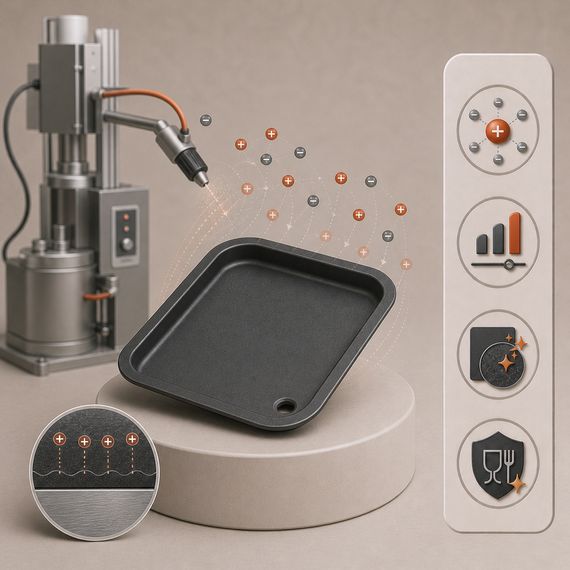
In electrostatic powder coating, dry coating material is directed toward a metal surface by an electrical charge. Converting the powder layer formed during application into a consolidated film depends on subsequent treatment suited to the selected material. Electrostatic attraction alone does not provide curing or food contact compliance.
If recovered powder is used, maintain traceability between virgin and recovered material. Assess the suitability of the blend against the relevant material instructions. Preventing a different product left from the previous batch from reaching the new surface is an inspection issue. Booth cleaning and material changeover arrangements should be reviewed for product identity as well as efficiency.
Grounding and geometry
The part’s electrical connection, hanging arrangement, and surface cleanliness are application control points. Open flat surfaces and deep recesses do not create the same coating conditions. Charged particles do not automatically reach every area equally; film distribution at bottoms, corners, and edges requires separate inspection.
Nordson’s technical checklist addresses powder failing to reach holes and recesses among problems associated with the Faraday cage effect. This general process information does not verify the equipment or settings used by Powerpan. The manufacturer’s troubleshooting checklist explains the geometric limitation.
Material selection
Not every powder coating is a non-stick food coating. Examine the powder material’s product code, intended application, body compatibility, and processing instructions. Mentioning PTFE is also not enough to establish that a powder is suitable for use on pans. Coating family and application method are separate selections.
- Identify the part material and surface preparation needs.
- Add recesses and edges to the measurement plan.
- Define film and heat treatment conditions according to the material instructions.
- Clarify final inspection and intended-use documentation.
Efficiency and environmental assessment
Where recovery is possible, check powder cleanliness, mixing of colors or formulations, and conditions for reuse. Do not assume that all recovered material will become finished product. No definite efficiency rate should be stated without recording material input, coated surface, recovered powder, and waste together.
Environmental assessment also requires more than examining the application material alone. Surface preparation, cleaning chemicals, heat treatment, and waste management are part of the file. Describe the part geometry and intended use in your inquiry to Powerpan; confirm the feasibility of powder coating for that part and the service scope. The application method’s name does not itself confer environmental or food safety approval.