
Hamburger bun line coatings and multi-cavity pans
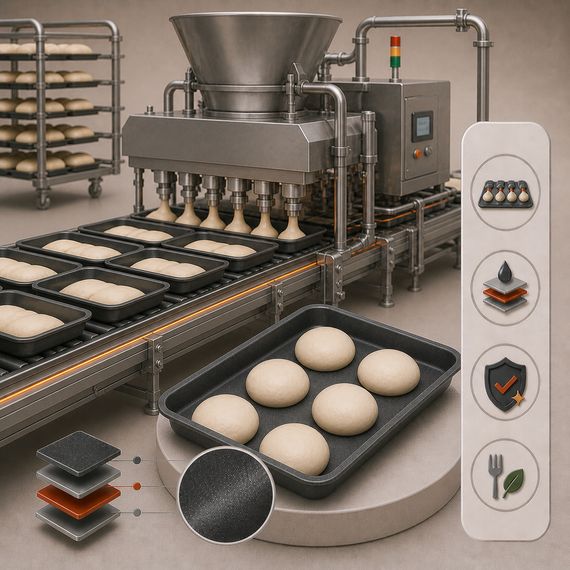
In hamburger bun production, sticking in one area of a multi-cavity pan can cause different release results within the same batch. A coating assessment should examine each cavity’s base, sidewalls, and transitions together. An inquiry to Powerpan should explain whether the problem occurs across the entire pan or only in particular cavities.
Cavity geometry and metal condition
The round cavity contributes to the product’s shape, but coating alone does not determine portion weight or final dimensions. Dough placement, proofing, and baking conditions also affect the result. A crushed cavity or bent body requires an assessment separate from surface renewal.
Residue building up between cavities is not the same as sticking inside a mold. Photographs should show the problem cavity and edge details as well as an overall view of the pan. If the pan has holes or functional channels, preserving these features requires a separate assessment.
Narrowing down the cause of sticking
If the problem recurs in particular cavities, review loading, heat exposure, and release procedures. A sesame-topped product or a different recipe does not, by itself, validate a particular coating choice. Match the system’s own operating limits to the conditions in production.
- Cavity layout and product shape.
- Areas where sticking or wear occurs.
- Dough, greasing, and baking information.
- Contact during automatic release and handling.
- Cleaning tools and chemicals.
First-batch assessment
After coating, conduct the trial using the normal production recipe. Record product release, the appearance of the base, and results in different cavities. Do not declare uniform performance across the pan or zero waste without a comparison under the same conditions.
Food-contact compliance is assessed separately from these production observations. A management certificate and a product-specific file are not interchangeable. Multilayer systems or systems with different reinforcements should not be definitively ranked by service life based on their names either.
Identifying cavities by their positions during inspection makes recurring problems easier to locate and track. Specify which cavities are affected instead of simply saying that the pan has a sticking problem. Make comparisons using the same filling and release procedures.
Planning the coating project
Share the quantity, cavity geometry, operating procedures, and existing surface condition with Powerpan. Batches to be removed from production can be planned around sound spare equipment; this approach does not guarantee uninterrupted operation. Remove pans with peeling from service for quality review. Confirm urgent delivery or priority arrangements separately.