Transport cart selection starts with what equipment will be moved and between which locations. A stack of empty trays, a rack loaded with products, and a transfer within production do not create the same requirement. In a transport cart request to Powerpan, share tray dimensions, the route of use, and load information together.
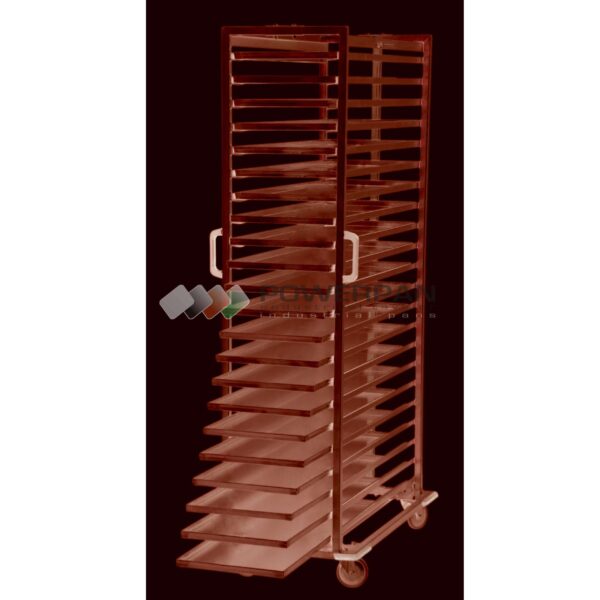
Platform and racked structures provide different placement arrangements. Assess stack height and load balance on a platform, and tray edge seating and rack spacing in a racked design. No model should be assumed automatically suitable for every facility or tray.
Tray contact and passage clearance
The cart’s external dimensions matter as much as its internal loading dimensions. Check doors, aisles, and turning areas. Rack spacing must be based not only on tray height but also on the clearance the product needs during transport.
Contact edges must not damage coated trays. Even with the same external tray dimensions, edge profiles and stacking structures may differ. Check combined use against actual product drawings; do not assume a promise of perfect fit or damage-free contact.
Wheels and environmental conditions
Flooring, thresholds, washing, and temperature conditions affect wheel selection. Use near an oven does not establish suitability inside it. Verify limits for the body, wheels, and other components separately through the relevant technical information.
| Request information | Assessment topic |
|---|---|
| Tray and product | Layout, rack spacing, and contact |
| Total load | Body and moving parts |
| Route | External dimensions and maneuvering space |
| Environment | Temperature, washing, and material compatibility |
Confirm current models, material grade, load limit, and options before ordering. Warranty, service, and spare parts coverage are commercial terms separate from technical specifications. Any claim about documentation or marking must be based on actual product documents.
Stacking empty trays for transport and placing a product-loaded tray on every rack are different arrangements. Specify the handling method as well as tray count in the request. Compare rack spacing, usable layout, and external dimensions together; a single catalog capacity value does not describe every loading arrangement.
During use, distribute the load evenly and do not exceed the cart’s defined limits. If the body, racks, or wheels are damaged, set the equipment aside for inspection. Choose cleaning products compatible with the material. Plan delivery and first-use inspections against the accepted model specifications.