When selecting a stainless steel trolley, what it will carry and where it will operate matter as much as the material name. Tray shelving, a flat platform, and another carrier arrangement do not meet the same needs. Assess the cleanability of food production equipment through its complete construction, including frame, connections, shelves, and wheels.
Confirm material for the specific product
The term stainless does not show that every component is made from the same steel grade. The frame, fasteners, and wheel parts may use different materials. Request material grade and surface information in the quote; verify compatibility with the selected cleaner through the product instructions.
A stainless frame does not automatically make equipment clean or prevent bacterial growth. Welded joints, narrow gaps, and inaccessible areas may make daily cleaning difficult. A material choice also does not replace the facility’s food safety management system or compliance documentation for all products.
Define the transport arrangement
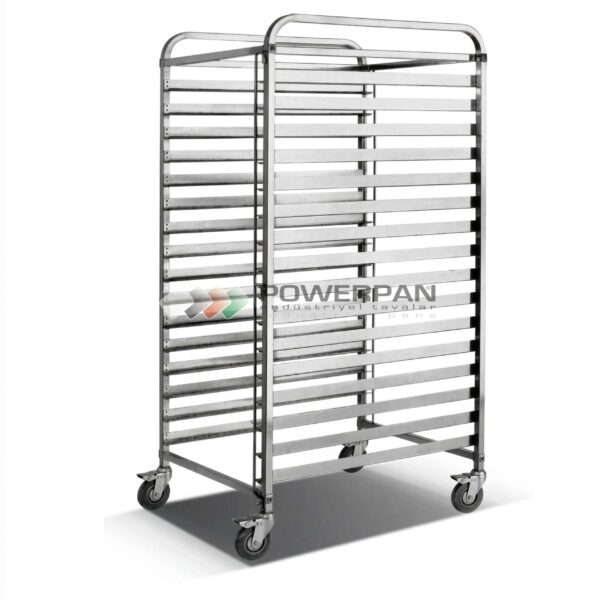
For tray use, check how rails support the trays and the shelf spacing. For platform use, assess the load’s footprint on the base and its potential to move. Total capacity cannot be inferred simply from a stainless frame or wheel count; follow the manufacturer’s limits for the model.
- Compare the loaded trolley’s external dimensions with doors and corridors.
- Trial loading height and gripping points against the working arrangement.
- Match wheel, brake, and connection options to the operating environment.
- Check for inaccessible areas or water accumulation during cleaning.
A trolley selected for warehouse transport is not automatically suitable for use inside a hot oven. For equipment entering an oven, verify conditions for wheels, bearings, brakes, and other components as well as the frame. Likewise, specify entry into a wet cleaning area or cold store separately during quotation.
Maintenance and operating records
During daily inspection, look for loose connections, sharp edges, bent rails, and wheels that are difficult to turn. Remove the trolley from service if a brake fails or load support is compromised. Cleaning the exterior alone does not count as resolving the problem.
Determine the washing method, cleaner, and rinsing routine according to the equipment instructions. Include wheel areas and lower connections in the cleaning plan. Share the product to be carried, load distribution, operating environment, and required shelf dimensions together in your inquiry to Powerpan. Confirm material grade, load limits, and maintenance information in writing and keep them with the equipment’s operating record.