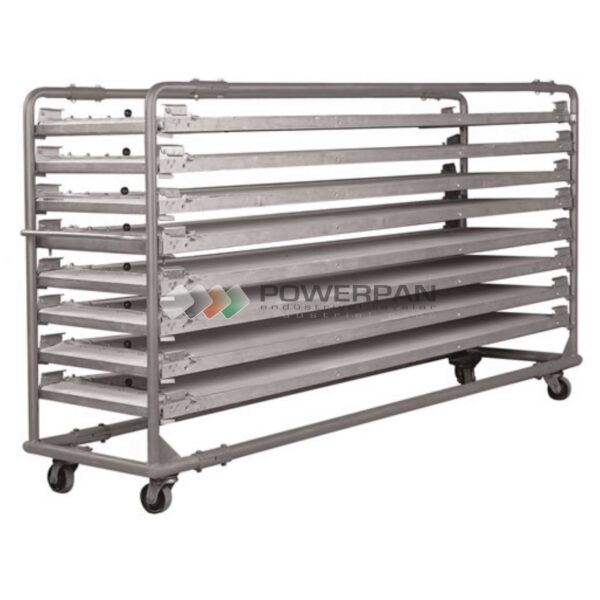
Selecting a pallet trolley involves more than knowing the pallet’s external dimensions. Load weight, placement on the platform, center of gravity, and transport route also matter. A wheeled platform and a pallet truck that lifts the pallet are different equipment; do not assume a transport trolley has a lifting function unless that function is specifically confirmed.
Positioning the load on the platform
The pallet’s base structure and support points must match the platform. Even if external dimensions appear suitable, a different design assessment is needed if the load is transferred through only a narrow area. Load extending beyond the platform edge, obstructing visibility, or moving during turns is also part of the operating conditions.
Load capacity is not determined simply by adding together the ratings marked on the wheels. The frame, connections, platform, and operating conditions must be considered together. Obtain the permitted total load and distribution conditions from the manufacturer’s product documentation; do not assume the same capacity for every model.
Assess the route together with the load
Door openings, corridor turns, floor joints, and slopes may affect transport. An empty trolley moving easily does not show that it will require the same force or turning space when loaded. Assess wheel selection against the actual floor and operating environment, not diameter alone.
- Compare the loaded trolley’s external dimensions with passageways.
- Define loading and unloading methods in advance.
- Determine braking or securing needs according to the working arrangement.
- Check accessible maintenance points on wheels and connections.
Wheeled transport may reduce manual carrying, but pushing and pulling still require assessment. HSE’s pushing and pulling guidance explains that using a load trolley does not remove this requirement. Plan the trial with the facility’s actual load and route.
Information needed before ordering
An inquiry to Powerpan should include pallet dimensions, load characteristics, total weight, placement method, and passage conditions together. For a trolley entering a cleaning area, also provide water and chemical exposure conditions. Confirm which models offer particular wheel, brake, or platform options at the quotation stage.
During daily inspection, look for loose connections, a damaged platform, wheels that do not turn, and brakes that do not work. Remove a defective trolley from service. Keep the limits on the product label or technical documentation visible. The name transport trolley alone does not provide sufficient information about lifting capability, training requirements, or a particular load capacity.