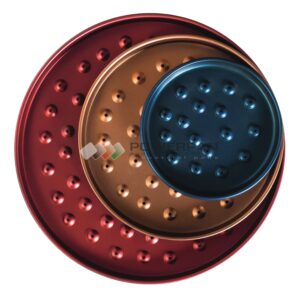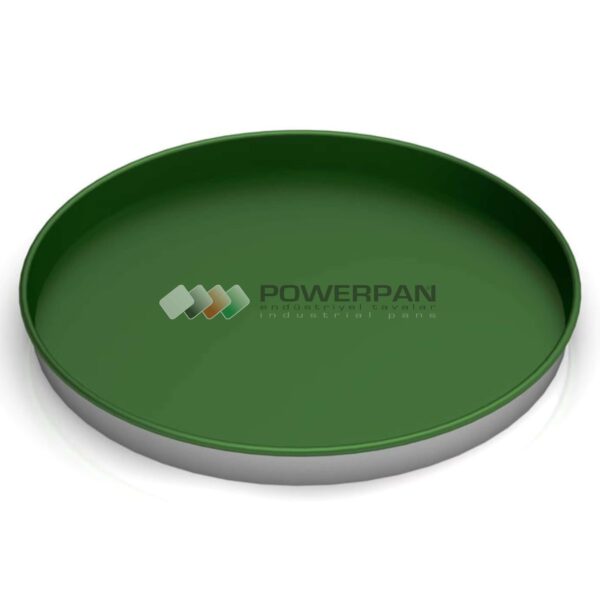
Selecting a round pizza tray is not limited to choosing one tray’s diameter. Plan different menu sizes, equipment used simultaneously in the oven, and serving flow together. One facility’s small, medium, and large may differ from another’s; specify dimensions clearly in the order.
Translate menu size into technical dimensions
Compare target pizza diameter with the tray’s usable internal area. External diameter may include a rolled edge or grip area. Two trays with the same external dimensions can have different dough areas because their edge profiles differ. Show internal diameter, external diameter, and depth separately in the sample or drawing.
Dough weight is not determined by tray diameter alone. Desired base thickness, recipe, and expansion behavior are also part of production planning. Recheck loading and baking arrangements when switching between menu sizes; do not assume every size finishes in the same time.
Trial the surface and edge together
| Design | Point to examine in trials |
|---|---|
| Solid base | Dough contact, oil retention, and product release. |
| Perforated base | Dough behavior in openings, residues, and cleaning. |
| Shallow rim | Product transfer and tool access. |
| Deep rim | Filling plan, edge contact, and release from the pan. |
A solid or perforated surface is one design decision affecting base results, not the only determinant. Compare with oven arrangement, recipe, and baking conditions held constant. Do not promise definite crispness or time savings based on hole count or diameter.
Fitting a tray set into the workflow
Check different sizes against racks, stacking areas, and any handling cart. Prevent tray edges rubbing against one another’s coatings. When assessing usage intensity, record cleaning, drying, and preparation time as well as baking. Plan spare tray requirements according to the actual operating cycle.
Coating and use limits
Sauce and cheese overflowing onto edges may leave residues different from dough contact at the base. Consider coating selection alongside these contacts and the maintenance method. Review the relevant product’s food contact file, technical use limits, and maintenance information; a general FDA or ISO statement does not fulfill product-specific assessment.
Verify coated tray suitability separately for open-flame or high-temperature applications. Do not cut pizza on the coated surface; transfer it to a suitable cutting surface. Remove trays showing coating separation from use for quality review. Send Powerpan menu sizes, expected internal and external dimensions, oven arrangement, and quantity requirements; clarify current product and delivery terms during quotation.