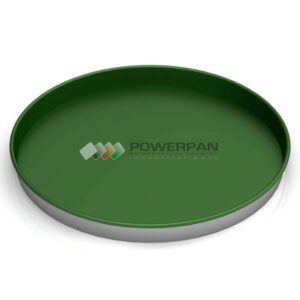
When selecting a round tray, first define the product and operation. Pizza dough, tart filling, and cake batter do not require the same base or edge structure. Instead of using one tray for every product, assess diameter, depth, surface, and removal method together.
Design changes with the product
Diameter affects horizontal product size; edge height affects filling and removal arrangements. A shallow tray and a deep mold with the same diameter may serve different purposes. Portion count and dough quantity are not determined by diameter alone; recipe and the facility’s serving standard also matter.
| Production need | Point to examine in the design |
|---|---|
| Pizza or round bread | Base contact, edge shape, and product transfer. |
| Tart or filled product | Depth, filling retention, and base structure. |
| Cake or layer-cake base | Filling plan, sidewall, and release from the mold. |
| Serving | Grip, support, and serving tool access. |
Solid, perforated, and patterned surfaces
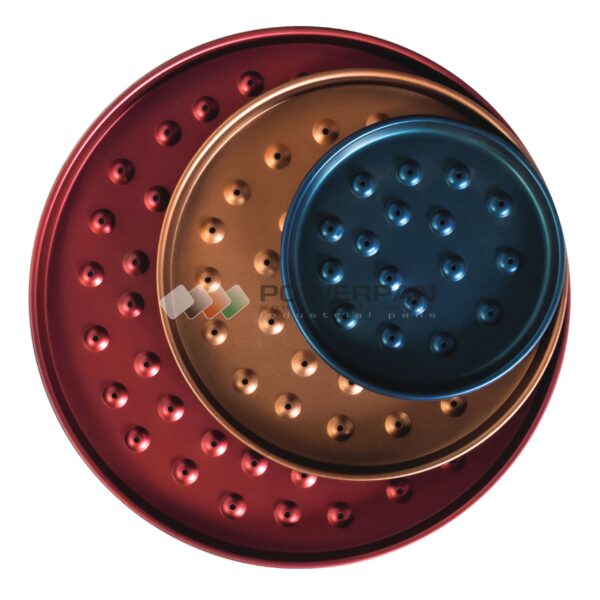
A solid surface has a continuous base, while a perforated design has openings. Grooves or relief patterns can also change product contact. Trial the selection with the target base appearance and actual recipe. Do not assume that one surface type will produce a crisper result or shorter baking time for every product.
Assess base structure separately for fluid mixtures and filled products. If a removable base is required, check the body joint, leakage behavior, and product transfer. Confirm during the technical discussion whether a particular pattern or mechanism is among current product options.
Oven and equipment compatibility
Compare external diameter with the net usable area of the rack or carrier. Also check door passage and loading movement. A round shape alone does not establish even heat distribution or trouble-free compatibility with a rotary system. Assess body support and operation with existing equipment.
Coating selection is based on baking and maintenance conditions as well as product contact. Do not infer system limits from a trade name. Verify suitability separately for a tray used in a high-temperature or open-flame environment. Review the food contact file separately from a successful baking trial.
Maintenance and refurbishment planning
Do not cut products on the coated surface; use suitable removal and cleaning tools. Dry trays according to the maintenance instructions and store them to prevent surface rubbing. Remove equipment showing coating separation from use for quality review.
Send Powerpan the product type, target internal dimensions, edge and base expectations, oven information, and quantity. For refurbishment, add body condition and damage photographs. A new coating does not repair a bent body or faulty mechanism; determine treatment suitability and delivery scope after inspection.