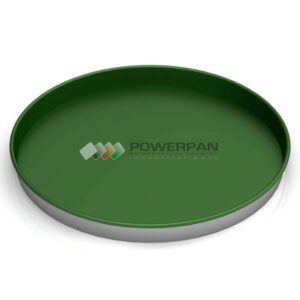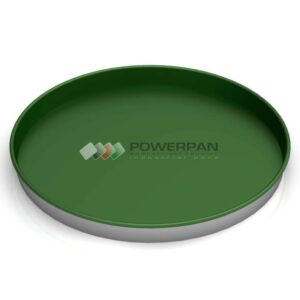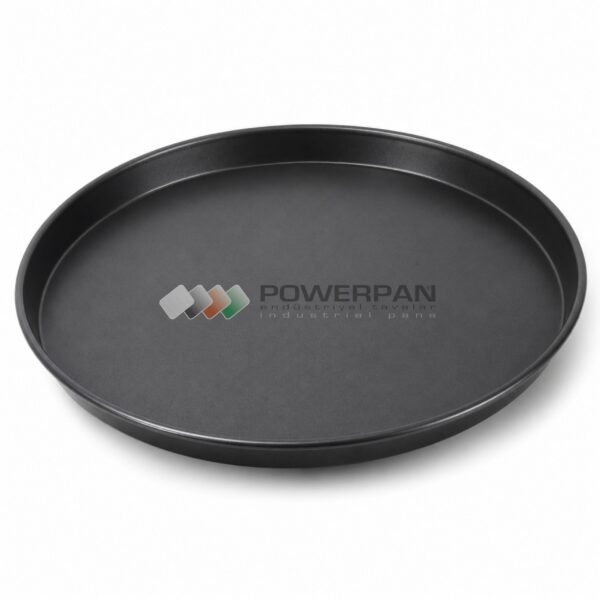
A round pizza pan supports a circular dough layout and handling during baking. The menu’s pizza size, dough characteristics, toppings, and baking method must be considered together for the right choice. A round shape alone does not guarantee even baking or a more efficient oven layout.
Comparing solid and perforated bases
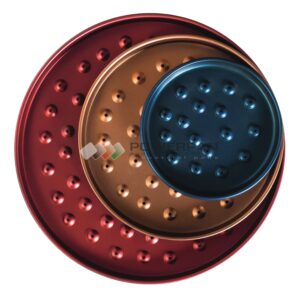
A solid base provides a continuous surface beneath the dough. With a perforated base, openings expose the product’s underside to the oven environment differently. Trial which is more suitable with the actual recipe and oven, together with the desired base structure. The pizza style’s name alone does not determine surface selection.
On a perforated pan, check dough behavior over openings, oil or sauce passing through, and hole cleaning. On a solid pan, observe base residues and product release. Do not infer a particular crispness level or fixed baking-time saving from hole diameter.
Edge height changes the operating arrangement
A shallow rim and a deep pan are different structures for holding dough and toppings. Sliding a product out and lifting it out are also different movements. Select the edge profile together with the movement of the spatula or transfer tool used.
- Target product diameter and dough thickness.
- Internal pan diameter, external diameter, and edge profile.
- Contact of sauce, cheese, and oil with the surface.
- Contact with the oven rack or floor.
- Product removal and serving arrangements.
When choosing diameter, check net oven loading space as well as portion plans. Measure the layout of pans to be used simultaneously. Do not assume round pans occupy less space than angular equipment in every oven.
Coating and heat conditions
Cheese overflowing onto the edge or sauce residues can increase cleaning needs. Assess edges and joints as well as the base when reviewing a coating. Select the system according to recipe, cleaner, and exposure conditions; do not expect a fixed service life from a trade name.
A coated pan is not automatically suitable for pizza ovens operating at high temperatures or with an open flame. Verify the product’s body and coating limits for the relevant system. Assess the oven setpoint together with the conditions to which the surface is exposed.
Trials and maintenance
Record base appearance, pan release, and edge residues in a sample trial. Do not cut pizza on the coated surface; transfer it to a suitable cutting surface for service. Clean and stack according to the maintenance instructions. Remove pans showing coating separation from use for quality review. Request a technical assessment from Powerpan by sharing product size, surface preference, oven information, and quantity requirements.