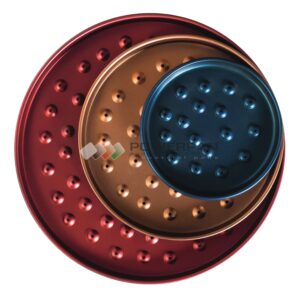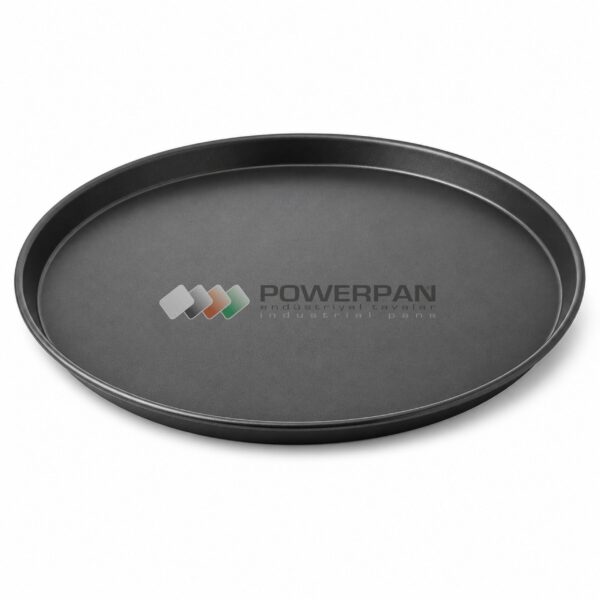
The first question in pizza pan selection is not which coating is better. Define pizza shape, dough placement in the pan, oven type, and serving method together. Round, square, or rectangular pans may be assessed for different cutting and presentation arrangements. Solid, perforated, or grooved bases may also give different results with the same recipe.
Shape and edge height
A round pan can be used for circular presentation, while an angular form can suit different portion cuts. However, the product name or pizza style alone does not determine mandatory pan geometry. Internal dimensions define the dough area; external dimensions define oven and handling fit. Assess edge height and slope together with removal.
A high-sided pan may guide the dough’s side boundaries more. This does not mean the same thickness or crust structure will be achieved with every recipe. Adjust dough quantity, proofing, and baking arrangements together with an actual sample.
Compare base options
| Base structure | What to check in a trial |
|---|---|
| Solid | Base contact, underside color, and removal |
| Perforated | Dough placement in holes, sagging, and underside |
| Grooved | Surface marks, product contact, and residue cleaning |
A perforated base does not automatically produce a crispier pizza with every dough. Trial dough structure and perforation pattern together. Likewise, a solid base cannot be said to always produce a soft result or a grooved base a very crisp one. Compare using the same recipe and similar oven loads.
Oven and coating compatibility
For high-temperature or direct-flame applications, verify the suitability of the pan body and coating separately. Avoid heating empty PTFE-coated equipment and overheating it; this operating point is also addressed in BfR’s explanation of PTFE. A coating name is not a temperature limit valid for every pizza oven.
Examine the sample pizza’s underside, edge development, and integrity during removal. If cutting will take place in the pan, assess the tool’s compatibility with the surface separately. Do not automatically consider sharp-tool use suitable in a coated pan.
During cleaning, inspect holes, grooves, and edge junctions. Remove pans with lifting coatings from production. Share the target pizza shape, dough characteristics, actual oven conditions, and serving method in your inquiry to Powerpan. Select the body, base pattern, and surface system together with this information; base the final decision on trial results, not only the product name.