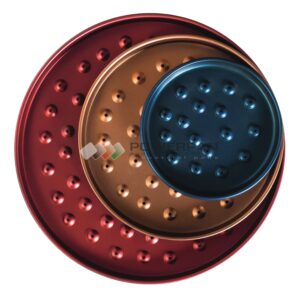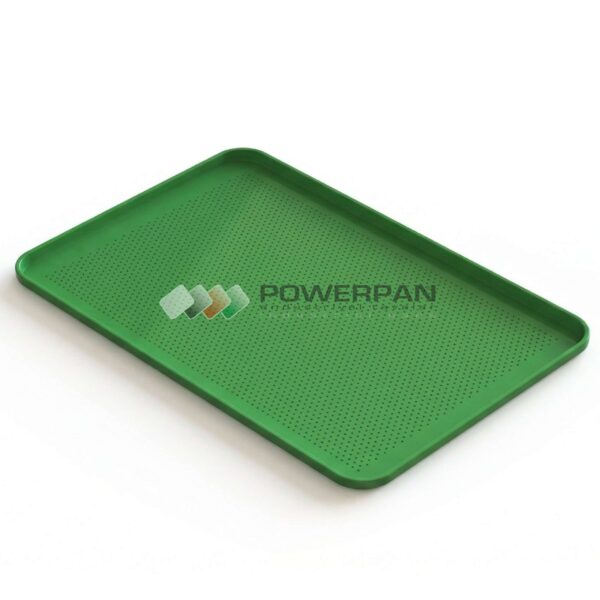
A classic perforated tray is considered for products such as simit and acma, using a baking surface with regularly spaced openings. Perforations make the base function differently from a continuous surface. The term classic does not mean every model has the same hole diameter, spacing, or body material.
Hole pattern and dough support
The size and spacing of holes affect support beneath the dough. Dough sagging into openings can leave marks on the base or cause release difficulties. Do not assess this solely through coating selection; examine dough consistency, placement, and hole geometry together.
If simit and acma will be made on the same tray, test each recipe separately. The amount of sesame, egg, or fat reaching the surface can also change use and cleaning conditions. A perforated surface should not be expected to produce scorch marks or a crisp base in every traditional product; define the desired result through the product’s own production criteria.
How to test the base
Sample baking can be performed with the same dough and oven position. Record base color, perforation marks, and release from the surface separately. Include cooling after removal from the oven in the assessment. Use specific results observed at the facility instead of a general percentage improvement in baking.
- Specify hole diameter, spacing, and pattern in the drawing.
- Share the dough type and placement method.
- Check contact between the oven rails and tray rim.
- Observe base marks and release in the sample.
- Look for burrs or coating damage around hole edges.
If paper or another liner is planned, repeat the trial with that arrangement. A liner changes the dough’s relationship with the perforated base. Results from an earlier bare-surface trial should not be transferred directly to the new application.
Keep openings clear during cleaning
Residue must not block openings. Clean with a soft brush suitable for the surface; do not enlarge holes with metal tips. Clarify coating selection and washing conditions using body and oven information.
Segregate trays with lifting coating, sharp edges, or substantial bending for assessment. Providing a hole drawing and target product information alongside the term classic perforated in a Powerpan request allows the correct model to be evaluated.