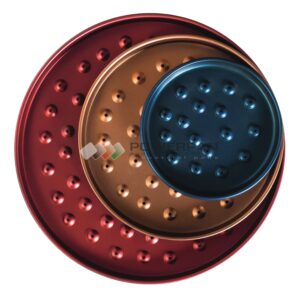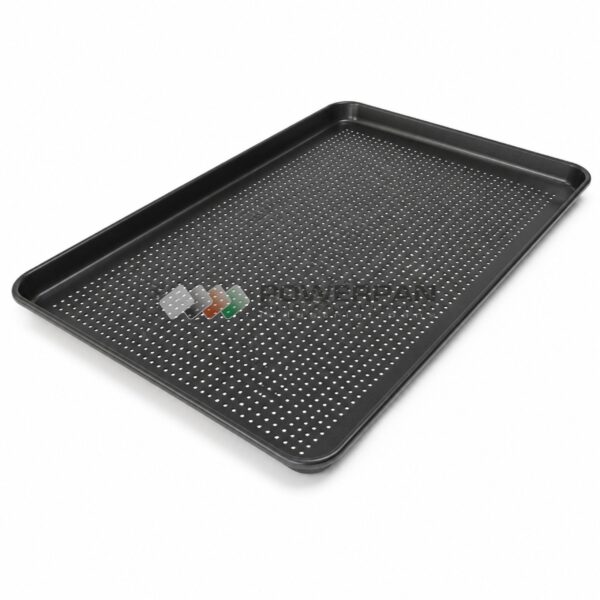
The 40×60 perforated tray differs from a solid tray through openings in its baking surface. The perforated base creates a geometry that affects airflow and moisture movement beneath the product. It can be considered for the desired base texture of simit, açma, or other dough products; holes alone do not guarantee a crisp result in every oven.
At the end of the trial, inspect the underside of the openings as well. Dough buildup may remain around holes that look clean from above. Cleaning inspection must not be limited to the easily visible upper base; it must cover the areas specified in the equipment instructions.
The relationship between dough and openings
Assess hole diameter, spacing, and pattern together with the product base. Openings may behave differently with very soft or fluid mixtures than with firmer dough. Check during trials for dough protruding into holes, marks on the underside, and product release. A perforated tray should not replace a solid tray for every recipe.
Oven airflow, loading arrangements, and spacing between products also affect baking. Paper or another intermediate layer can change the effect of the openings. Assess the tray using the layout and auxiliary materials that will actually be used at the facility.
Checking dimensions in the 40×60 format
The nominal 40×60 cm format does not mean that external dimensions and the usable base are identical. The drawing must show edge structure, corner bends, and support points. Compare oven rails, handling carts, and stacking arrangements separately. A similar size does not automatically establish mechanical compatibility.
- Hole layout and openings around the perimeter.
- Base flatness and how the tray sits on the rack.
- Product layout and space left for expansion.
- Coating and cleaning inspection around hole edges.
Coating and maintenance
Add the coating system code, conditions of use, and food contact scope to the order file. Check not only that hole edges are coated, but also the condition of the openings after application. A single micron thickness or temperature value must not be generalized to every perforated tray option.
During cleaning, check for dough and oil lodged in the holes. Scraping openings with a metal point can damage the surface; use approved tools and methods. Set aside trays showing blistering, peeling, or flaking. When contacting Powerpan, specify the 40×60 format, characteristics of the product recipe, and target base texture. Confirm hole diameter, pattern, body, and coating details through a technical drawing; establish product count capacity and baking time through controlled production trials.