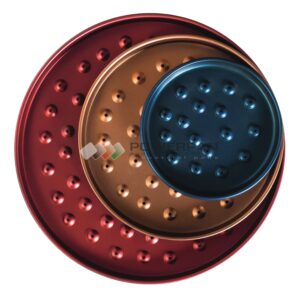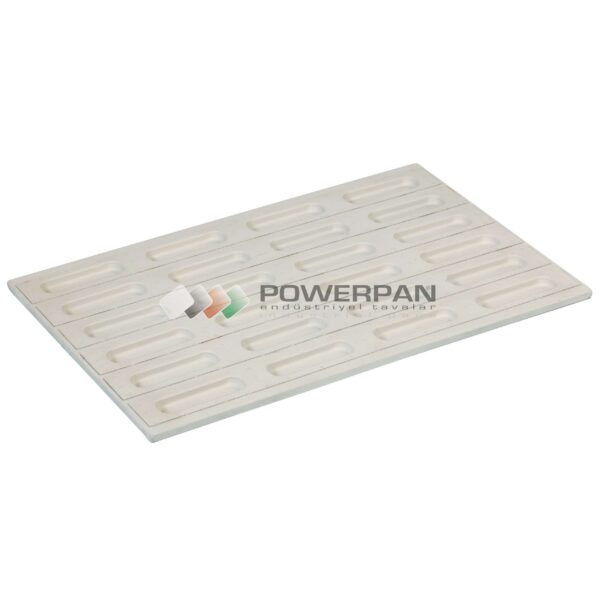
In this product description, an angled perforated tray means a base with holes arranged in a diamond pattern. The word angled should not be read only as the slope of the tray edge. When selecting it for large açma, bazlama, or other broad dough products, assess this pattern’s compatibility with the recipe separately.
Keep product spacing and oven position constant when comparing it with the previous perforated tray. If the recipe changes at the same time as the hole pattern, differences in the product base cannot be attributed to geometry alone.
Separating pattern from result
A perforated base affects airflow and moisture movement beneath the product. However, a diamond pattern alone does not guarantee even baking, unburned edges, or a shorter baking time. Oven airflow and product layout matter alongside hole diameter, spacing, and the overall pattern. Compare different perforated trays using the same recipe.
For large products, examine how much of the openings the base covers and whether dough protrudes into the holes. A broad product does not automatically require larger holes. Include dough softness, portion size, and the target base texture in technical trials.
What the drawing must show
- Hole pattern and distance from openings to the edges.
- The relationship of hole diameter and spacing to the product.
- External dimensions, usable base, and edge structure.
- Body, rack support, and stacking contact points.
Do not give exact figures for hole count or airflow without a product drawing. Nominal base area is not actual product capacity. Spacing between broad dough products and their dimensions after baking determine the layout.
High-temperature expectations
The name bazlama or a similar product does not make the tray suitable for every high temperature. Check the coating system’s use conditions separately. A common limit cannot be assigned to PTFE and ceramic-based options. Local thermal loading from an open flame or a stone oven must not be treated as equivalent to standard oven use.
During trial production, record base appearance, marks left by the dough in openings, and product release. Assess a crisp-base target using the actual process. Link the coating and food contact file to this use scenario as well.
When contacting Powerpan, share the diamond-pattern hole arrangement, target product dimensions, and oven conditions. Remove residues around hole edges using an approved cleaning method; do not scrape openings with metal points. Set aside trays showing peeling or flaking for quality review. Clarify geometry, coating, and use limits in writing before ordering.