
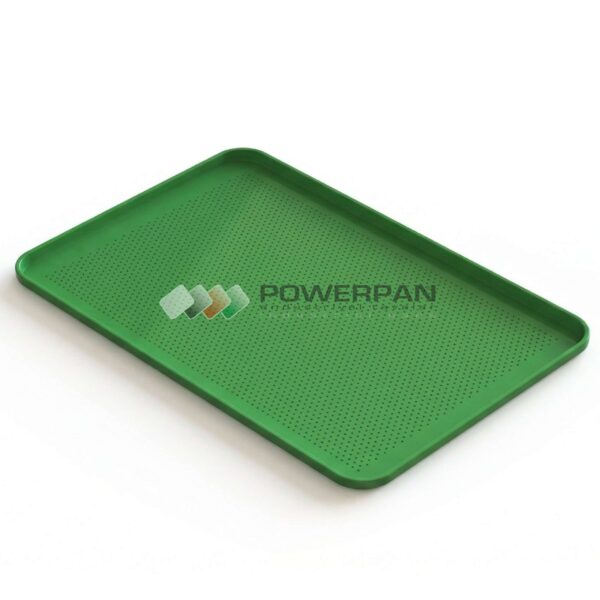
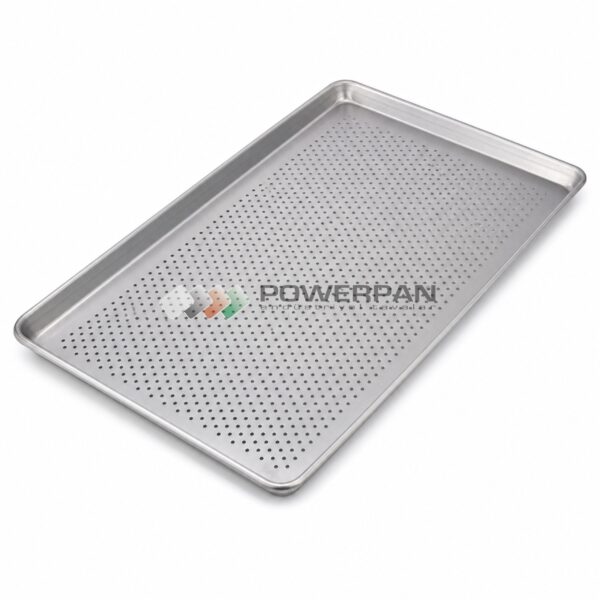
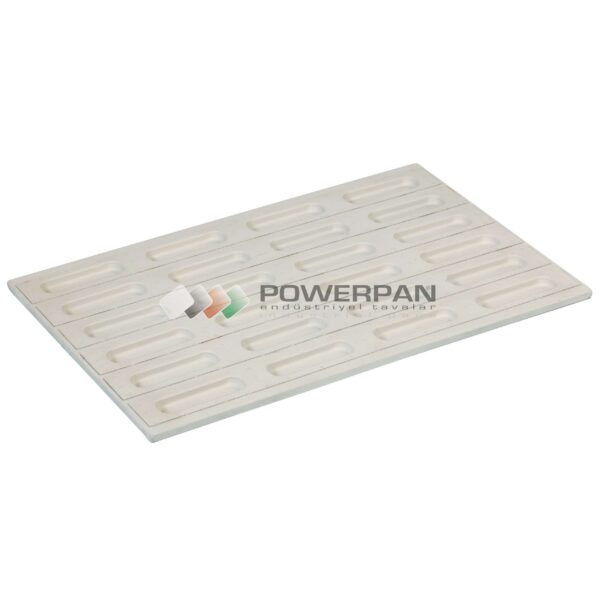
Perforated trays have openings in the baking surface that change its support and exposure to oven air. They may be considered where the product and process benefit from that arrangement, but perforation does not guarantee a particular crust or baking time.
Match the openings to the dough
Hole size, pattern, and spacing need to suit the product and loading method. Soft dough, seeds, toppings, and release practices may influence suitability. A perforated base does not imply intended contact with a direct flame.
Check construction and care
Specify the material, depth, edges, and support details alongside the perforation pattern. Inspect the condition around openings and the rim. Cleaning must address the actual design and selected coating without unapproved scraping or abrasive treatment.
- Identify the product and desired baking result.
- Provide the tray and perforation drawing.
- Describe proofing, baking, and release.
- Confirm rack fit and food-contact documentation requirements.
Compare a proposed perforated design with a solid tray under comparable production conditions. Differences in oven position, recipe, or loading should remain visible in the assessment. For renewal, the body and openings need inspection before deciding whether preparation and recoating are appropriate.