
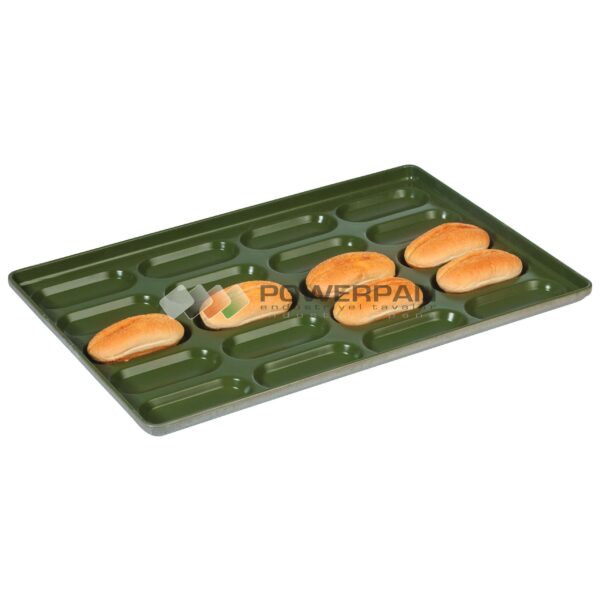
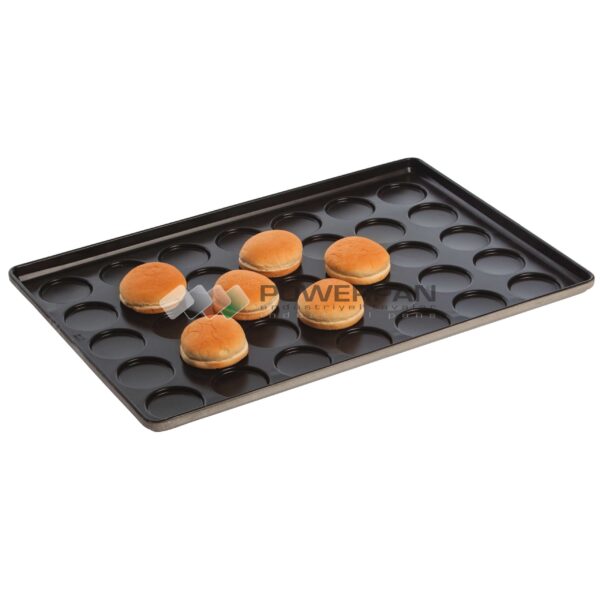
Classic flat trays provide an unformed baking surface for products whose shape is established mainly by dough preparation and loading. Bread, flatbread, and pastry applications still need different decisions about depth, edges, and surface treatment.
Specify more than the footprint
Confirm external dimensions, usable area, material, rim profile, and reinforcement. These features affect fit and handling. The base should also be assessed for flatness and condition; a solid flat surface does not automatically produce uniform baking in every oven.
Match the surface to the product
Describe the dough, spacing, baking cycle, and release method. Include cleaning and tool contact. A coating can be considered for the intended substrate and use, but it does not establish an unrestricted operating range or eliminate every process aid.
- Provide a drawing or reference tray.
- Identify rack and oven support details.
- Describe stacking and transport.
- State any food-contact documentation needs.
For existing trays, inspect rims and body distortion alongside coating wear. Recoating may be considered where the body remains suitable. If the main problem is fit, handling damage, or an unsuitable pan geometry, surface renewal alone may not address it.