
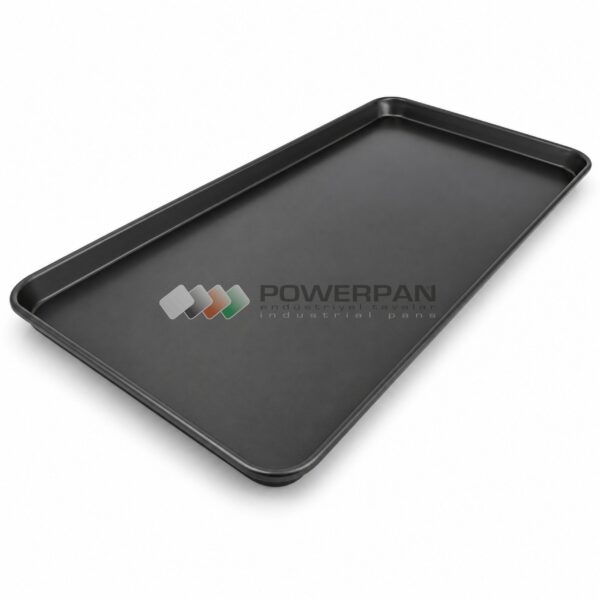
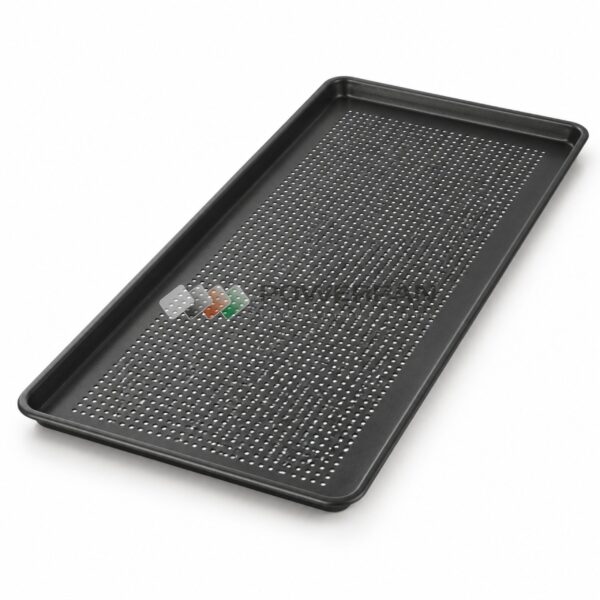
A 40×80 sheet pan has a nominal 40 by 80 cm format. Its longer footprint may suit some bakery layouts, but the dimensions alone do not establish equipment compatibility, output or a more efficient production cycle.
Confirm the complete handling route
Check the external dimensions, rim profile and support points against racks, conveyors and oven equipment. A common nominal width does not make a longer pan interchangeable with a shorter one. Include loading and unloading clearances as well as the space available inside the oven.
Choose the layout around the product
Product dimensions, spacing and expansion determine how the baking area is used. More surface area should not be converted directly into a promise of more finished output. The pan’s material, construction and loading pattern also need consideration.
- Confirm whether the surface is flat, perforated or formed.
- Identify depth, edges and reinforcement requirements.
- Describe handling, release and cleaning.
- Provide the coating and documentation requirements for the intended use.
Assess the surface and body together
A coating system should be selected for the actual application rather than from a universal temperature or lifetime claim. For existing pans, inspect distortion, joints and rims alongside visible coating wear. Where renewal is being considered, provide a drawing or reference sample so the proposed work remains connected to the correct pan design.