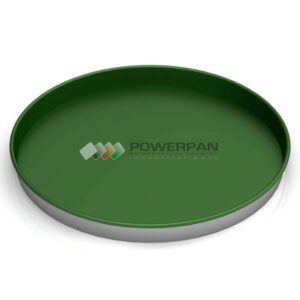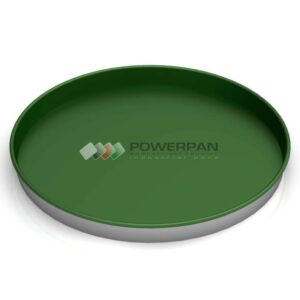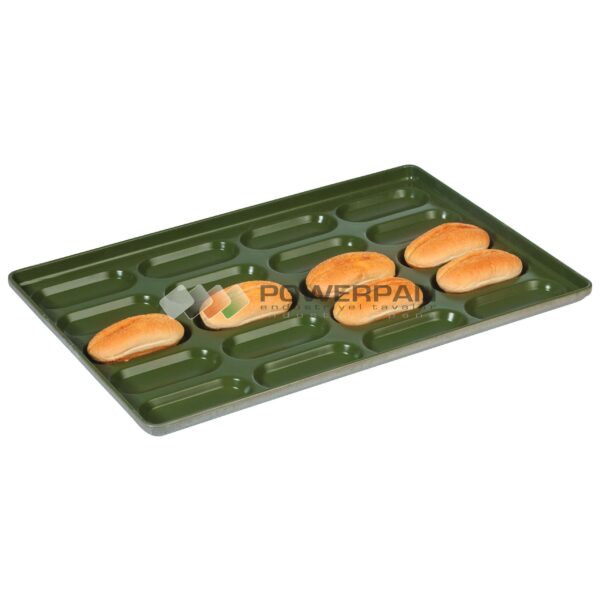
A classic flat tray is oven equipment that supports dough on a continuous base. In this design, considered with an aluminum body and PTFE surface, rim shape, internal area, and operating conditions are selected together. A flat base does not automatically equalize dough thickness or baking results.
Choose according to product placement
Individually placed pogaca or bread pieces and dough spread across a tray require different internal areas. Check the space needed for dough expansion during proofing and whether it will touch the rim. If a wet or filled product is planned, the term flat surface alone is not enough; rim and contact conditions must be assessed separately.
Read internal area, overall dimensions, and rim folds separately in the technical drawing. Check fit on existing oven rails, closure of the oven door, and placement on the rack. Consider product height and shelf spacing together; apparently suitable overall width and length are not enough.
Why consider a PTFE coating?
The coating is selected with the aim of making dough release easier. Keep the recipe and greasing routine unchanged during trials. A surface system name does not mean no sticking or oil-free operation for every product. Suitability can be checked again when a new dough is used on the same tray.
- Specify product type, dough load, and placement spacing.
- Share the oven model and actual operating conditions.
- Explain greasing and product removal methods.
- Record center, edge, and base colors in the sample.
If pizza or another high-heat application is planned, verify the coated tray’s suitability specifically. Do not infer safe use in every oven from a general tray description. Holding an empty tray at high heat and direct-flame conditions must also be addressed in the technical discussion.
Maintenance and body inspection
Do not cut with a knife on the coated base or clean it with a metal scraper. After the tray cools, remove residue using appropriate tools and cleaner. Clarify machine washing conditions against the instructions for the selected product.
Segregate equipment with base warping, rim damage, or lifting coating. A recoating assessment also covers the body’s usability. Providing product, oven, and maintenance information together in a Powerpan request allows the classic flat tray to be selected for the facility’s operating conditions.